The Taraba State Government has rejected claims by opposition politicians that the administration of Governor Agbu Kefas has accumulated a debt burden of more than N1.2 trillion within three years.
The government described the allegation as inaccurate and capable of misleading the public, insisting that official figures from the Debt Management Office (DMO) do not support the claim.
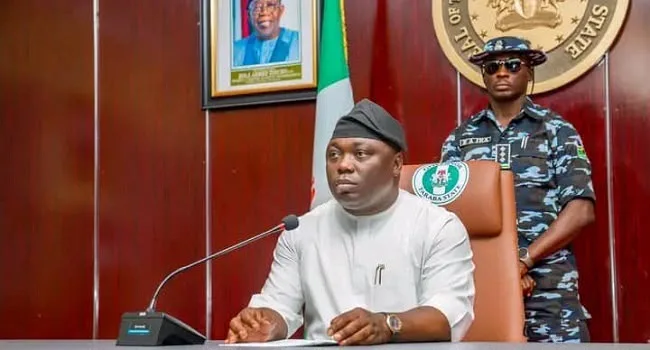
The Commissioner for Finance, Budget and Economy, Sarah Adi, made the clarification in a statement, urging political actors to verify financial records before making claims about the state’s debt position.
According to her, DMO records show that Taraba’s domestic debt stood at about N85.51 billion as of December 31, 2025.
She said the figure was actually about N2.45 billion lower than the approximately N87.96 billion domestic debt recorded before the current administration assumed office.
Adi said the earlier DMO figure was reported as of September 30, 2022, and cautioned against presenting approved loans, proposed financing and actual outstanding debt as one figure.
She explained that Taraba’s external debt stood at approximately $46.47 million as of December 31, 2022, compared with about $48.04 million by December 31, 2025.
The commissioner acknowledged that the state has secured approvals for various financing arrangements but stressed that approval of a facility does not automatically mean the entire amount has been borrowed or disbursed.
She cited the N206.78 billion financing facilities approved by the Taraba State House of Assembly in 2023 involving Zenith Bank, United Bank for Africa, Fidelity Bank and Keystone Bank.
According to her, the facilities were tied to specific revenue streams, including allocations from the Federation Account, Joint Account Allocation Committee proceeds, Value Added Tax and internally generated revenue.
Adi said repayments and restructuring had occurred under the facilities, making it inaccurate to add the original approved amount to the state’s current debt stock without determining the amounts actually drawn and outstanding.
She also addressed concerns surrounding a proposed N350 billion capital-market financing programme, saying the state had not received the entire amount.
The commissioner explained that the N350 billion represents the maximum size of the proposed programme and not money already received by the state.
She said the immediate transaction under consideration is an initial tranche of about N35 billion, subject to regulatory and statutory requirements as well as prevailing market conditions.
The government further clarified the status of three financing agreements worth approximately $268 million signed with the ECOWAS Bank for Investment and Development on June 26, 2026.
The facilities are expected to finance the first phase of an integrated industrial park, irrigated rice production and processing, and a 50-megawatt solar power project.
However, Adi stressed that signing the agreements does not mean the funds have already been disbursed, noting that the facilities remain subject to applicable conditions, regulatory procedures and statutory approvals.
She said four separate categories must be distinguished when assessing the state’s financial position: existing debt stock, approved borrowing facilities, outstanding balances and proposed or undisbursed financing.
According to her, combining the headline figures of all these categories and presenting the total as Taraba’s current debt would give a distorted picture of the state’s actual indebtedness.
The commissioner said the Kefas administration was guided by development, repayment capacity and transparency in its borrowing decisions.
She maintained that every financing arrangement should support productive infrastructure, economic growth and improved welfare while ensuring that the state has the capacity to meet its repayment obligations.
The government also pledged to continue complying with legislative, regulatory and disclosure requirements governing public borrowing and capital-market transactions.
It urged members of the public and political actors to focus on verifiable figures and ask critical questions about how much was approved, how much was actually drawn, repayments made, outstanding balances, undisbursed funds, projects being financed and the state’s ability to repay.
The Taraba Government said it welcomes legitimate scrutiny of its finances but insisted that such scrutiny must be based on accurate and verifiable information rather than figures that could mislead the public.