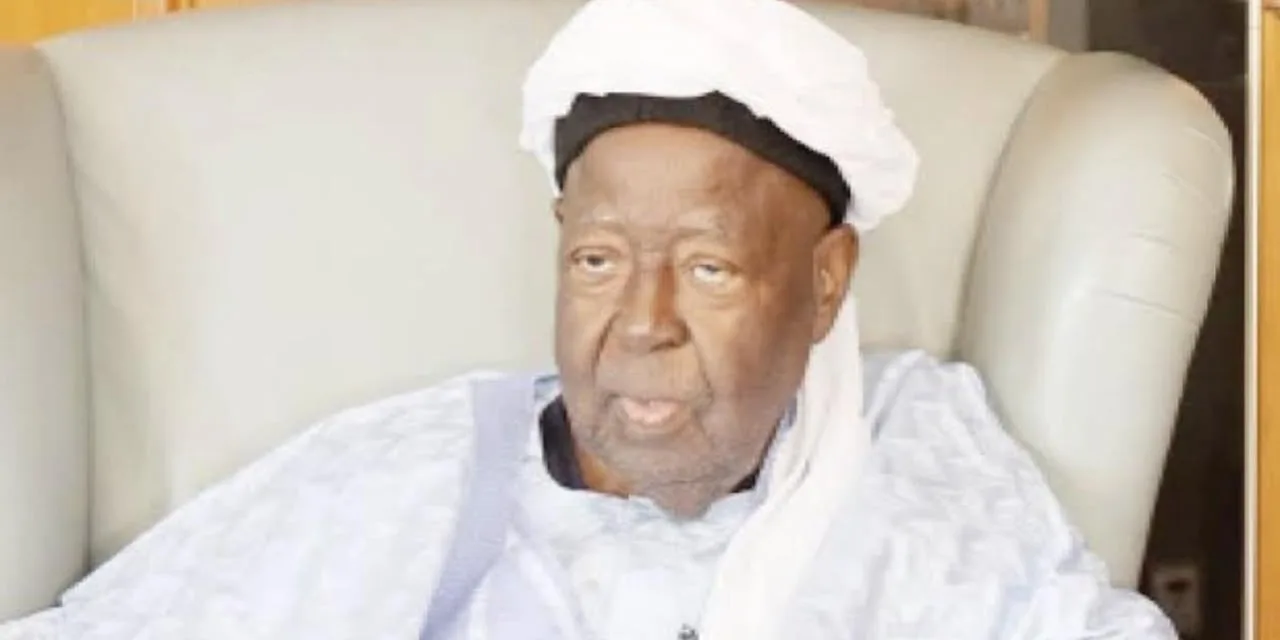
Former Minister of Finance and Sardauna of Sokoto, Alhaji Abubakar Alhaji, has passed away at the age of 88.
Family sources confirmed that the elder statesman died on Thursday morning at a hospital in Abuja after a brief illness.
Alhaji was a distinguished public servant who held several strategic positions in Nigeria’s public service. During the military administration of General Ibrahim Babangida, he served first as Minister of National Planning before being appointed Minister of Finance. In 1992, he was named Nigeria’s High Commissioner to the United Kingdom, a position he held until 1996 when he was succeeded by Ambassador Uche Okeke.
A direct descendant of Shehu Usmanu Danfodiyo, Alhaji began his career in the Federal Civil Service in 1964 as an Assistant Secretary in the Federal Ministry of Finance. Over the years, he rose through the ranks, becoming Permanent Secretary in the Federal Ministry of Trade in 1975 before returning to the Ministry of Finance in the same capacity in 1979.
During his tenure as Permanent Secretary, he played a key role in managing Nigeria’s engagements with international creditors and was a member of the country’s negotiating team for the Lomé II Agreement. His contributions to economic planning and public administration later earned him appointment as Minister of State for Budget and Planning in 1988.
He was appointed Minister of Finance in 1990, overseeing the nation’s financial affairs during a period of economic reforms and Nigeria’s dealings with international financial institutions.
Following his service in government, Alhaji represented Nigeria as High Commissioner to the United Kingdom, where he was recognised for his diplomatic service and commitment to strengthening bilateral relations.
Beyond government, he occupied one of the most respected traditional positions in Northern Nigeria. In 1990, he was turbaned as the Sardauna of Sokoto, succeeding to the historic title once held by the late Sir Ahmadu Bello, the former Premier of Northern Nigeria. In that role, he was widely regarded as a custodian of the history, culture and enduring traditions of the Sokoto Caliphate.
His death marks the end of a distinguished career in public service, diplomacy and traditional leadership.