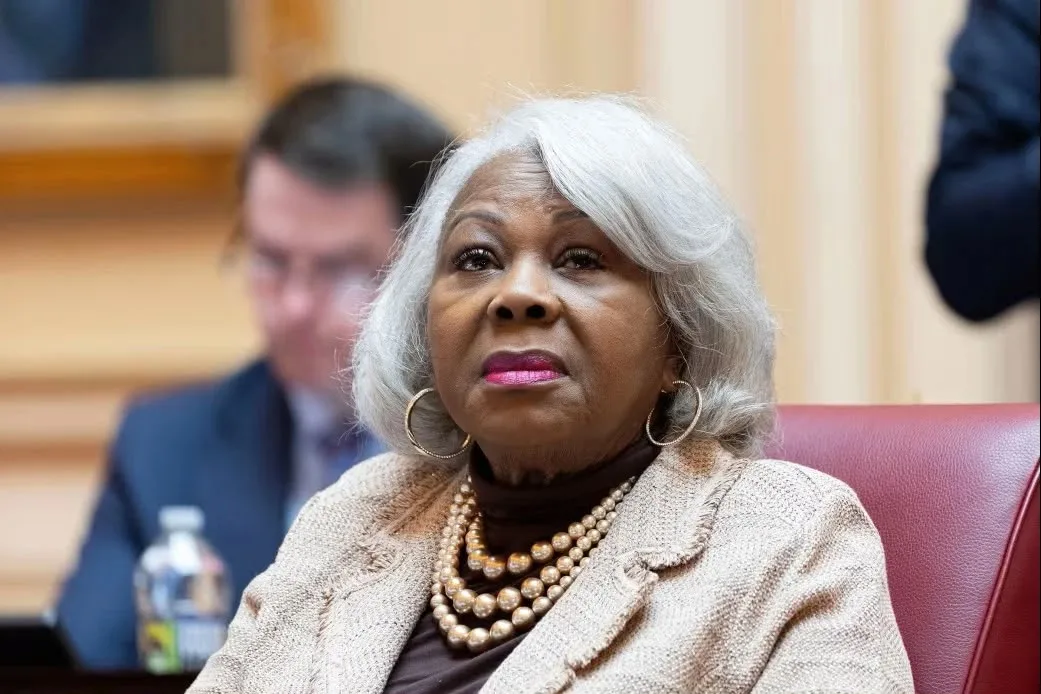
The United States has imposed sanctions on International Criminal Court (ICC) President Tomoko Akane and senior trial lawyer Abdoulaye Seye, deepening Washington’s confrontation with the Hague-based tribunal over its investigations involving American and Israeli officials.
US Secretary of State Marco Rubio announced the latest measures on Tuesday, accusing the ICC of exceeding its authority and threatening US national sovereignty.
Rubio said the sanctions were part of a wider campaign by President Donald Trump’s administration to challenge the court’s jurisdiction and limit its ability to investigate or prosecute officials from countries that have not accepted its authority.
“Last month, I launched a diplomatic campaign to dismantle the ICC’s threat to our national sovereignty,” Rubio said in a statement.
He added: “The Trump Administration is sanctioning ICC President Tomoko Akane and Senior Trial Lawyer Abdoulaye Seye in our unwavering mission to protect Americans from this sham of a court.”
Akane, a Japanese judge who has headed the ICC since 2024, and Seye, a Senegalese national serving as a senior trial lawyer, were placed on the US Treasury Department’s Specially Designated Nationals list.
The designation subjects any US-based assets linked to them to blocking measures and generally prevents American individuals and companies from conducting transactions with the sanctioned officials.
Rubio accused the two ICC officials of being involved in efforts to investigate and prosecute officials from countries that have not consented to the court’s jurisdiction.
He described the ICC as a “corrupt and fatally politicised” institution that had abused its powers and gone beyond its mandate.
According to Rubio, the US campaign against the court will continue beyond the latest sanctions, with Washington expected to apply diplomatic and economic pressure to countries supporting the ICC.
The United States has also urged ICC member states to reconsider their backing of the court.
Established by the 1998 Rome Statute, the ICC currently has 125 member states and is responsible for prosecuting individuals accused of genocide, crimes against humanity, war crimes and, in certain circumstances, aggression.
The US, however, is not a party to the Rome Statute and rejects the ICC’s jurisdiction over American citizens.
The court maintains that it can exercise jurisdiction over crimes allegedly committed within the territory of a member state, even when the suspect is a citizen of a country that is not a member.
That disagreement has become particularly contentious following the ICC’s decision in November 2024 to issue arrest warrants for Israeli Prime Minister Benjamin Netanyahu and former Defence Minister Yoav Gallant over alleged war crimes and crimes against humanity linked to Israel’s military operations in Gaza.
The court also issued arrest warrants for Hamas leaders.
Washington condemned the warrants against the Israeli officials, while Israel rejected the ICC’s authority altogether.
Although both the US and Israel are outside the Rome Statute, the ICC has maintained that alleged crimes committed in territories falling under its jurisdiction can be investigated regardless of the nationality of the accused.
The dispute also stems from the ICC’s earlier investigation into alleged crimes involving US military personnel in Afghanistan.
Trump’s administration has made opposition to the court a major part of its policy, particularly in response to proceedings involving Israeli officials.
The latest sanctions were imposed under an executive order signed by Trump on February 6, 2025. The order authorised punitive measures against ICC officials and others involved in investigations or prosecutions targeting US personnel or officials from the United States and certain allied countries.
The White House argued that the ICC lacked jurisdiction over the US and Israel because neither country had joined the Rome Statute, while accusing the court of undermining American sovereignty and national security.
The executive order allows Washington to block targeted individuals’ property and financial interests and impose restrictions on their entry into the United States, with certain measures also extending to family members.
The administration has since widened its sanctions beyond former ICC Prosecutor Karim Khan to include judges and other officials associated with the court.
Tuesday’s action against Akane and Seye represents another step in Washington’s expanding pressure campaign against the tribunal.
Rubio announced last month that the US would intensify diplomatic efforts aimed at challenging the ICC, including using economic and political pressure against countries that support actions taken by the court.
The administration says its objective is not limited to shielding individual American officials but also to prevent the ICC from exercising what Washington considers illegitimate authority over US personnel.
Rubio has argued that countries relying on American military protection should not support an institution capable of subjecting US personnel to international prosecution.
The dispute has increasingly placed Washington at odds with several European allies, many of which are ICC members and have defended the court’s independence.
The ICC, for its part, has rejected the argument that its investigations automatically violate the sovereignty of countries that are not parties to the Rome Statute.
Akane has previously insisted that political and economic pressure would not influence the court’s judicial work.
Addressing the Assembly of States Parties in December, she said ICC judges would continue to interpret their legal mandate independently, stressing that the court’s independence and impartiality remained fundamental to its operations.