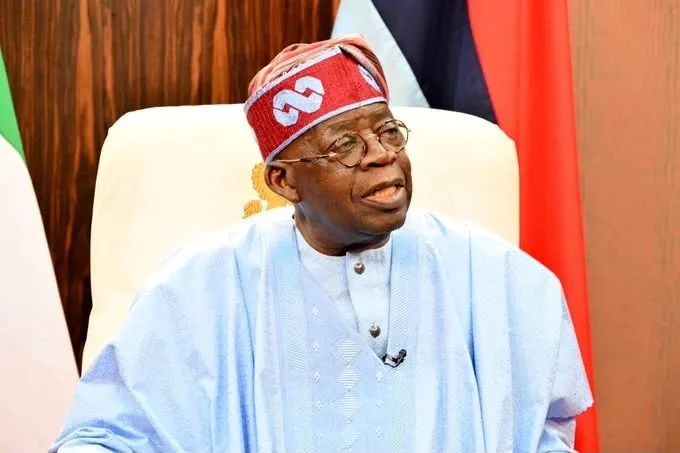

President Bola Ahmed Tinubu has joined the United States Department of Justice in seeking additional time to respond to a legal bid demanding the release of records linked to past allegations of drug trafficking involving him.
Tinubu’s lawyers filed a notice before the US District Court for the District of Columbia, formally supporting the government’s request for a 10-day extension to respond to a motion for summary judgment.
The filing was publicised by Von Batten-Montague-York, L.C., a US-based policy advisory and lobbying firm retained by former Vice President Atiku Abubakar.
In the notice, Tinubu’s legal team said it wanted his response to follow the same timetable as that of the US government.
The document was signed by Christopher W. Carmichael and Victor P. Henderson of Henderson Parks, LLC.
However, according to the lobbying firm, US District Judge Beryl Howell rejected the request for an extension.
The firm subsequently accused Tinubu of seeking to use the additional time to influence political discussions in Washington over the potential release of the records.
It alleged that the Nigerian president could argue to US officials that releasing the documents would damage US-Nigeria relations and affect cooperation on security and counterterrorism issues.
The firm also warned against any alleged attempt by US government officials to interfere with the judicial or Freedom of Information Act process.
The case, Aaron Greenspan v. Executive Office for U.S. Attorneys, et al., has been pending before the US court for more than three years.
The records sought in the case relate to previous US investigations and allegations concerning Tinubu and alleged narcotics-related financial activities.
The matter is connected to a 1990s federal investigation into a Chicago-based heroin trafficking network and the subsequent forfeiture of about $460,000 linked to an account in Tinubu’s name.
US court records and federal investigative documents have previously detailed the seizure and forfeiture proceedings involving the funds.
In 1992, US authorities obtained an order freezing more than $1.4 million in accounts associated with Tinubu. A year later, a US federal court ordered $460,000 in one of the accounts to be forfeited to the government.
Court records described the forfeited funds as proceeds of narcotics trafficking or money involved in transactions allegedly violating US money-laundering laws.
Tinubu has consistently denied any involvement in drug trafficking and has rejected allegations of criminal wrongdoing.
His lawyers have argued that the US proceedings were civil in rem forfeiture proceedings, meaning the action was directed against the money rather than against Tinubu personally.
They have also maintained that Tinubu was never arrested, indicted, arraigned or convicted of a drug-related offence in the United States.
The latest filing adds another development to the long-running legal battle over access to the records and whether they should be made public.