General News
STATE GOVERNMENTS SPEND N512BN ON GOVERNORS’ OFFICES, TRAVEL IN SIX MONTHS
Thirty-three state governments spent a combined N512.10 billion on Government Houses
By Fatima Abdullahi · August 26, 2026 9:10 AM · 5 min read · 166 views
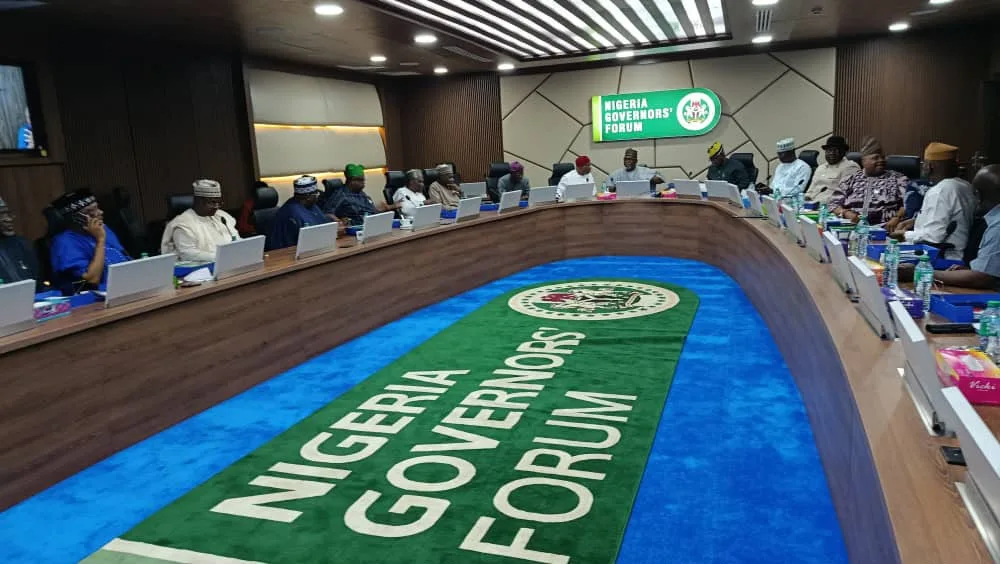
Thirty-three state governments spent a combined N512.10 billion on Government Houses, Governors’ Offices and travel-related expenses in the first half of 2026, according to an analysis of state budget implementation reports.
The figure is more than 4,700 times the combined salaries of Nigeria’s 36 governors for the same six-month period.
A governor’s official monthly salary is put at N503,000, amounting to N3.018 million in six months. For all 36 governors, the combined salary would therefore total about N108.65 million.
However, available budget records showed that N420.01 billion was spent on Government Houses, Governors’ Offices and related executive administration, while another N92.09 billion went to travel and transport.
The combined expenditure represents a significant public cost beyond the basic salaries of the governors.
The analysis does not mean governors personally received the N512.10 billion. Government House and Governor’s Office allocations cover several official expenses, including administrative operations, staff, protocol, maintenance, utilities, official residences, security-related activities and state functions.
Travel and transport allocations also cover official journeys and transportation-related expenses across the state public service.
The review was based on first- and second-quarter 2026 Budget Implementation Reports. It used the largest identifiable expenditure under Government House, Governor’s Office or executive administration in each state, alongside the general travel and transport budget head.
Comparable data were available for Abia, Adamawa, Bauchi, Bayelsa, Borno, Cross River, Ebonyi, Ekiti, Enugu, Gombe, Imo, Jigawa, Kaduna, Kano, Katsina, Kogi, Kwara, Lagos, Nasarawa, Niger, Ogun, Ondo, Oyo, Plateau, Sokoto, Taraba, Yobe and Zamfara. Comparable figures were not available for Edo, Osun and Rivers.
Compared with the first six months of 2025, spending under the examined budget heads declined. The corresponding 2025 figure was N557.80 billion, comprising N465.07 billion for Government House, Governors’ Office and similar executive administration expenses, and N92.73 billion for travel and transport.
The 2026 figure was therefore about N45.70 billion lower, representing an 8.19 per cent decline.
Government House and Governors’ Office expenditure accounted for most of the reduction, falling from N465.07 billion in 2025 to N420.01 billion in 2026, a decrease of N45.05 billion or 9.69 per cent.
Travel and transport expenditure remained relatively stable, declining marginally from N92.73 billion to N92.09 billion, a difference of about N643.66 million or 0.69 per cent.
A development economist, Aliyu Ilias, said the figures showed why discussions about governors’ earnings should not focus solely on their official salaries.
He argued that the broader expenses and privileges associated with running executive offices make the actual cost of maintaining the offices substantially higher than the governors’ personal remuneration.
Ilias also criticised the structure of political administration, saying the large financial requirements attached to executive offices contribute to the high cost of governance in Nigeria.
At the state level, Kogi recorded the highest identifiable Government House and Governor’s Office expenditure during the period at N65.34 billion. Ogun followed with N45.26 billion, while Lagos recorded N45.04 billion.
Kano spent N25.87 billion, Ekiti N25.22 billion and Cross River N23.92 billion. Bayelsa recorded N22.99 billion, followed by Imo with N19.43 billion and Enugu with N16.20 billion.
At the lower end, Oyo recorded about N1.95 billion, Sokoto N2.20 billion, Kwara N2.59 billion and Abia N2.78 billion.
For travel and transport, Plateau recorded the highest identifiable expenditure at N10.11 billion, followed by Lagos with N8.23 billion and Taraba with N5.16 billion.
Niger spent N4.45 billion, Ekiti N4.41 billion, Bauchi N3.75 billion and Yobe N3.68 billion.
The spending patterns also varied significantly between states and across the two years.
Kogi’s Government House and Governor’s Office expenditure rose from N51.99 billion in the first half of 2025 to N65.34 billion in 2026, an increase of about N13.34 billion or 25.66 per cent.
Bayelsa’s spending increased by N8.51 billion, from N14.48 billion to N22.99 billion, while Cross River recorded a sharp rise from N9.91 billion to N23.92 billion.
Lagos also recorded a substantial increase, with expenditure rising from N25.86 billion in 2025 to N45.04 billion in 2026, representing an increase of about N19.18 billion.
On the other hand, Ogun’s spending declined from N49.83 billion to N45.26 billion, while Kano’s fell from N28.84 billion to N25.87 billion.
The Revenue Mobilisation Allocation and Fiscal Commission is responsible for determining the remuneration of governors and other political office holders. The commission has also been reviewing the remuneration structure for political office holders, with proposed changes expected to undergo legislative consideration.
The spending figures come amid increased revenue accruing to state governments following the Federal Government’s economic reforms.
Data from the Ministry of Finance previously showed that N47.25 trillion was distributed through the Federation Account between 2023 and 2025, representing more than half of the N93.13 trillion shared between 2017 and 2025.
The increased revenue has consequently intensified calls for greater accountability over how states utilise public funds, particularly in the areas of infrastructure, public services and the cost of governance.
The latest figures underline the significant difference between the official salaries of governors and the broader expenditure required to maintain their offices and the administrative structures surrounding them.