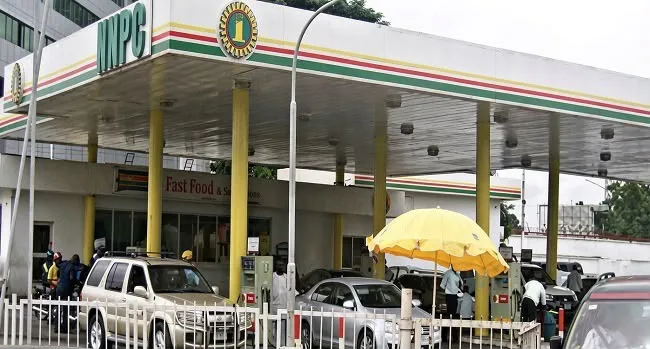
The Federal Government has announced a 30-day petrol discount on fuel sold by the Nigerian National Petroleum Company Limited (NNPCL), as part of efforts to ease the burden of rising fuel prices on Nigerians and reduce fluctuations in pump prices.
The Minister of Finance and Coordinating Minister of the Economy, Taiwo Oyedele, disclosed this on Thursday during a press briefing on fuel prices and subsidy-related issues in Abuja.
Oyedele explained that the initiative would initially run for 30 days, with priority given to public transport operators across the country. He stressed that the arrangement was not a return to fuel subsidy but an effort by the government to make petrol available at cost.
He said the measure was introduced because existing interventions had not sufficiently addressed the rising cost of transportation and its impact on households and businesses.
The minister also revealed that the Federal Government was negotiating a price ceiling of ₦1,350 per litre on the ex-gantry or landing cost of petrol, under a proposed mechanism designed to moderate price fluctuations.
He clarified that the proposed ceiling did not mean petrol would be sold at ₦1,350 per litre at filling stations. Rather, the policy is intended to prevent sudden changes in international crude oil prices and foreign exchange rates from immediately triggering sharp increases in domestic fuel prices.
According to Oyedele, refiners and importers would initially absorb any costs above the proposed ceiling and recover the difference later when market conditions become favourable.
He maintained that the arrangement was neither a subsidy nor a form of price control, but a strategy to make petrol prices more predictable and reduce the economic uncertainty caused by frequent increases.
The minister noted that maintaining relatively stable prices over time would offer greater relief to consumers than allowing sharp increases and subsequent reductions in quick succession.
He added that the proposed ₦1,350-per-litre ceiling would be reviewed monthly, with the relevant figures made public to promote transparency and accountability.