
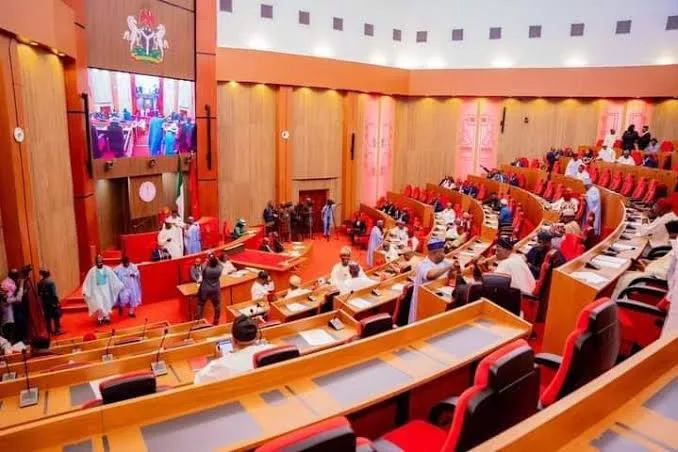
The Senate has passed a bill to rename the National Insurance Commission (NAICOM) as the Insurance Regulatory Commission (IRC), as part of efforts to strengthen insurance regulation and align the country’s legal framework with current realities and global best practices.
Lawmakers said the bill would provide a comprehensive legal framework for the regulation and supervision of all categories of insurance business in Nigeria, enabling the industry to compete effectively at the global level and improve its international competitiveness.
The legislation, titled the Insurance Regulatory Commission (Establishment) Bill, 2026, was passed following the consideration and adoption of the report of the Senate Committee on Banking, Insurance and Other Financial Institutions, presented by its Chairman, Senator Adetokunbo Abiru (APC, Lagos East).
Presenting the committee’s report, Senator Abiru said the National Insurance Commission was established under the National Insurance Commission Decree of 1997 to regulate insurance companies, brokers and loss adjusters, protect policyholders, monitor the financial solvency of operators, and enforce compliance across the industry.
He noted that although the Commission has played a significant role in promoting compliance, enforcing standards and developing Nigeria’s insurance market, its enabling law has become obsolete and no longer reflects the realities of the modern insurance industry.
According to him, the existing law has failed to keep pace with evolving regulatory demands and global best practices, creating gaps that have necessitated comprehensive legislative reforms.
Abiru explained that one of the major objectives of the bill is to establish the independence of the Commission and strengthen its regulatory powers, enabling it to make decisions without undue external influence.
He said the proposed law grants the Commission enhanced powers to exchange information and collaborate with domestic and international regulatory and supervisory authorities, issue regulations, guidelines, standards and directives on insurance-related matters, and exercise stronger intervention and resolution powers to address financially distressed insurance companies while protecting policyholders and preserving financial stability.
The committee chairman further stated that the bill strengthens the governance structure of the Commission by introducing clear requirements on the expertise, competence and integrity of members of its Governing Board, ensuring that only qualified professionals with experience in insurance, finance, risk management, law and corporate governance are appointed.
The legislation also introduces stricter penalties and enforcement measures, including increased fines, suspension of operating licences, additional liabilities for erring operators, and the disqualification of individuals found responsible for the failure of insurance institutions from holding positions within the industry.
To improve regulatory oversight, the bill updates provisions relating to supervision, inspection and intervention by removing procedural bottlenecks, such as the requirement for prior ministerial approval before directors of failing or distressed insurance institutions can be removed or replaced.
It also empowers the Minister of Finance to constitute an Interim Management Committee for the Commission within 30 days of the expiration or termination of the tenure of its Governing Board.
In addition, the bill expands the statutory objectives of the Commission to include the effective administration, supervision, regulation, control, integrity and development of insurance business in Nigeria.
The legislation further provides legal protection for the Commission and its officers against claims arising from the lawful execution of their duties and strengthens the Commission’s position in judicial proceedings involving regulatory actions.
With the passage of the bill by the Senate, the National Insurance Commission is set to transition to the Insurance Regulatory Commission upon the completion of the legislative process and presidential assent.