The Federal Government has commenced plans for a new national assessment of illicit small arms and light weapons in Nigeria, nearly a decade after the country’s first baseline survey was conducted in 2016.
The initiative was announced on Wednesday in Abuja during a workshop convened by the National Centre for the Control of Small Arms and Light Weapons (NCCSALW) to examine the outcome of the 2016 exercise and identify lessons for the proposed survey.
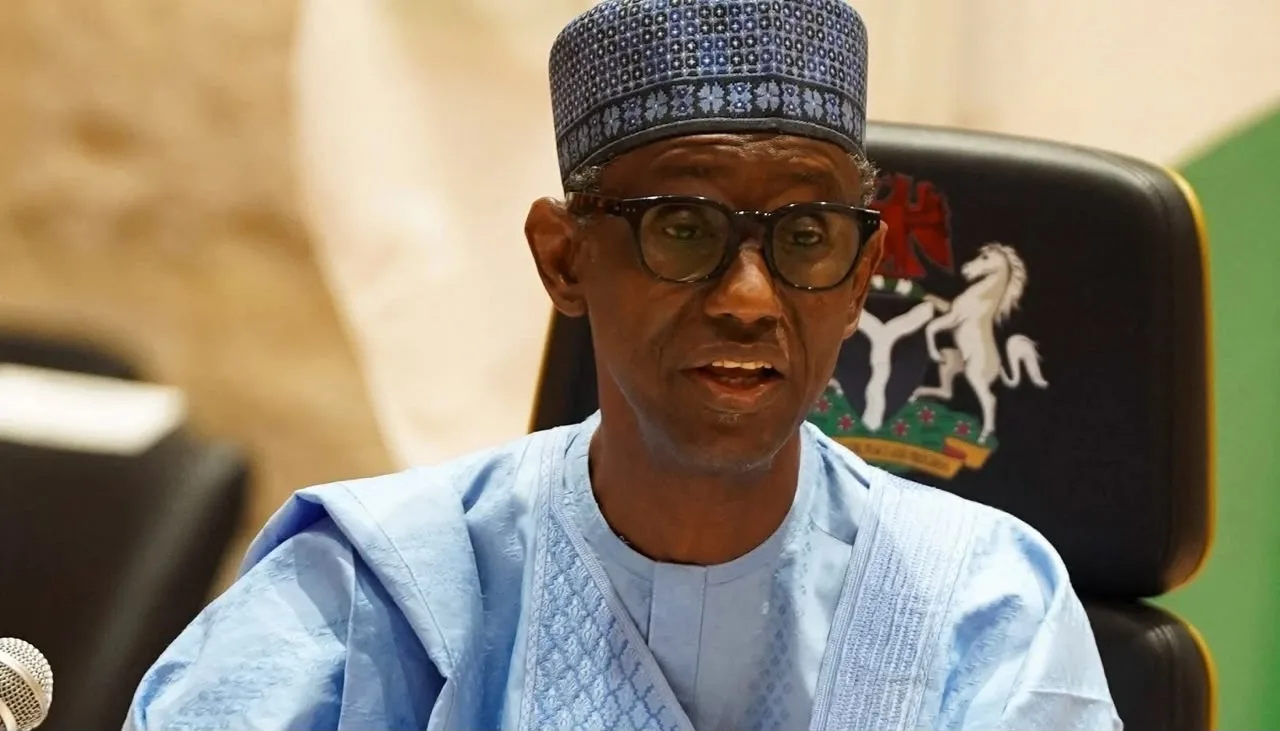
Representing the National Security Adviser, Nuhu Ribadu, at the event, the Director of External Affairs in the Office of the NSA, Solomon Fehintola, said the proliferation of illegal weapons remained a major driver of insecurity across the country.
He linked the circulation of such weapons to banditry in the North-West, farmer-herder conflicts in the North-Central, urban criminal activities and terrorism in the North-East.
Ribadu stressed that the government needed reliable and current data to effectively confront the problem, warning that security policies could not continue to be developed on assumptions.
“Government’s response to this threat cannot be based on guesswork. It must be built on evidence,” he said.
According to him, an updated national baseline would provide an important foundation for security planning by helping authorities understand the movement of illicit weapons and improve the targeting of disarmament and counter-proliferation measures.
He further called for a coordinated approach involving security agencies, state and local authorities, traditional and religious leaders, civil society groups and affected communities.
“First, an accurate and credible baseline is a strategic national security asset. It sharpens the targeting of counter-proliferation and disarmament efforts and strengthens our ability to track the flow of illicit weapons across our borders and within our communities.
“Second, this must remain a whole-of-government and whole-of-society effort. Security agencies, sub-national governments, traditional and religious institutions, civil society organisations and communities themselves must all contribute to the process.
“The next survey must therefore be designed to draw on all these sources of knowledge and information,” he said.
Also speaking, the Director and Deputy High Representative of the United Nations Office for Disarmament Affairs, Adedeji Ebo, said relying on the 2016 findings alone would no longer provide an accurate picture of Nigeria’s security situation in 2026.
“You cannot conduct a solid national threat analysis in 2026 based solely on data from 2016,” Ebo said.
He explained that the absence of current data had weakened the government’s ability to accurately determine the quantity of illicit weapons in circulation, identify their sources and trace their routes across the country.
Ebo urged the organisers to ensure that the new exercise captures information beyond government databases, noting that communities affected by armed violence often possess valuable knowledge that may not be reflected in official records.
He also called for credible sampling methods and adequate training and protection for field workers, particularly those collecting information in violence-prone areas.
“Sampling must be defensible, while enumerators must be properly trained and adequately protected. Data collected from communities affected by violence carries real risks for those providing it,” he said.
Ebo added that traditional and religious leaders, women and youth groups, farmers, fishers, artisanal producers and survivors of armed violence should be incorporated into the exercise.
“Traditional and religious leaders, women’s organisations, youth associations, farmers, fishers, artisanal producers and survivors of armed violence all possess knowledge that no database can fully capture,” he said.
The Director-General of the NCCSALW, retired Deputy Inspector-General of Police Johnson Kokumo, said the country’s security landscape had undergone significant changes since the first baseline assessment almost 10 years ago.
Kokumo said emerging criminal activities, changing patterns of violence and evolving trafficking routes had altered the illicit weapons environment, making a fresh assessment imperative.
“Nigeria’s security environment has evolved considerably. The nature and patterns of armed violence have changed. New forms of criminality have emerged, trafficking routes and methods have adapted, while illicit weapons proliferation continues to interact with political, social, economic, environmental and security challenges,” he said.
He described the 2016 survey as a major milestone that contributed to the development of Nigeria’s policy response to illicit arms, including the establishment of the NCCSALW and the formulation of a National Action Plan on small arms control.
The new survey is expected to provide updated evidence to guide national efforts to curb the proliferation and trafficking of illicit small arms and light weapons.