
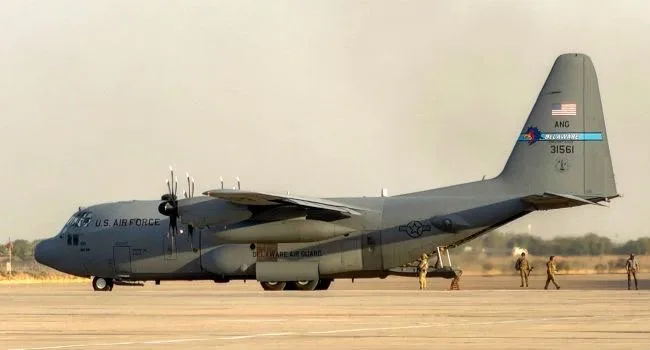
The US-led international coalition is set to end its military mission in Iraq after more than a decade of operations against Islamic State (IS) militants, marking a major shift in the country’s security landscape.
The coalition deployed forces to Iraq and Syria in 2014 after IS seized large territories across both countries and carried out widespread killings and other atrocities.
Although IS was territorially defeated in Iraq in 2017 and in Syria two years later, coalition forces remained in the region to conduct operations against the group’s remnants.
Baghdad and Washington reached an agreement in 2024 to gradually wind down the coalition’s mission. Since then, troops have withdrawn from bases across Iraq, with their presence eventually limited to the semi-autonomous Kurdistan region in the north.
The remaining troops are scheduled to leave the region on Wednesday.
The Iraqi government has said the withdrawal could also help address the presence of powerful Iran-backed armed groups, which have cited the deployment of foreign forces as a justification for retaining their weapons.
Prime Minister Ali al-Zaidi has declared October 1, the day after the coalition’s departure, as “Sovereignty Day.”
The heads of Iraq’s executive, legislative and judicial branches said the occasion would mark the completion of the country’s move towards full sovereignty and reinforce the authority of state institutions.
They also called for weapons held outside government control to be addressed in accordance with timelines established by the government.
Zaidi, who assumed office this year with US support, has pledged to strengthen the state’s control over weapons and persuade armed factions to hand over their arms to government authorities.
His administration initially set September 30 as the deadline for armed groups to disarm but later dropped the deadline as negotiations continued over how weapons would be brought under state control.
Several influential factions have continued to reject calls for disarmament, prompting senior political figures to intervene in an effort to reach a compromise.
The groups have demanded conditions including the complete withdrawal of foreign forces and an end to what they describe as American political and economic interference in Iraq.
Kataeb Hezbollah, one of the most powerful Iran-backed factions, described the coalition’s departure as a step towards achieving full Iraqi sovereignty.
However, the group also issued a warning to Zaidi’s administration, saying a government that fails to serve the interests of the Iraqi people would be removed by whatever means necessary.
The US-led coalition and Iran-backed armed groups had fought IS as a common enemy during the campaign against the jihadist organisation.
Their relationship, however, deteriorated after IS lost its territorial strongholds, with armed factions demanding the departure of US forces and carrying out drone and missile attacks against coalition personnel.
The attacks prompted retaliatory US strikes, some of which killed senior commanders of the armed groups.
During the wider Middle East conflict, Iran and allied factions intensified attacks against US-linked forces, including troops stationed in Iraq’s Kurdistan region.
Residents in Erbil, the capital of Iraqi Kurdistan, have expressed concerns over their security following the coalition’s withdrawal, particularly amid repeated drone attacks on the autonomous region.
The US-led coalition also ended its military presence in Syria earlier this year.