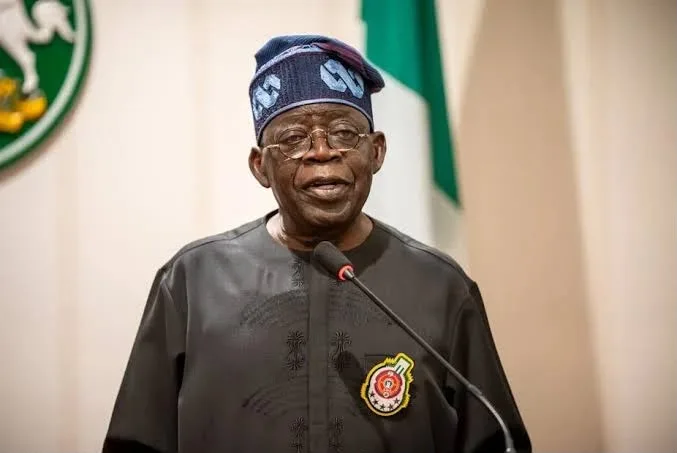
President Bola Tinubu has approved the immediate dissolution of the Presidential Implementation Committee (PIC) on the Alienation of Federal Government Properties, bringing to an end the operations of the body established in 2000 during the administration of former President Olusegun Obasanjo.
The President also directed that all responsibilities previously handled by the committee be transferred to the Attorney-General of the Federation and Minister of Justice, Lateef Fagbemi.
The directive was disclosed in a statement issued on Thursday by the Special Adviser to the President on Information and Strategy, Bayo Onanuga. According to the statement, the dissolution takes effect retrospectively from November 5, 2025.
As part of the directive, the committee’s Secretary, B. S. Dutsin-Ma, has been instructed to immediately stop representing the committee or the Federal Government in all matters relating to its activities.
The Presidency explained that the decision followed a review of the committee’s operations, which revealed that it had gone beyond the responsibilities for which it was originally established. It noted that the expanded activities had triggered numerous legal disputes across the country, making the committee’s continued existence unnecessary.
Created under the Obasanjo administration, the committee was tasked with supervising the sale, lease and privatisation of Federal Government landed assets as part of the government’s monetisation policy. The policy was designed to dispose of government-owned houses, vehicles and other assets while ending the practice of providing such benefits to public officials.
The committee was chaired by the then Minister of Housing and included representatives from the Ministries of Justice, Transportation, Health and Agriculture, as well as the Nigeria Police Force. Professor P. T. Ahire, then a Deputy Director in the Office of the Secretary to the Government of the Federation, served as its pioneer secretary.
In March 2001, the Federal Executive Council established a Panel of Inquiry to prepare a White Paper that would guide the implementation of the committee’s recommendations. The panel completed its assignment and submitted its report after 21 months.
Although the monetisation policy became one of the landmark reforms of the Obasanjo administration, its implementation remained contentious for years, with disputes over property valuations, allegations of undervalued sales, claims that politically connected individuals benefited from the process, and numerous court cases challenging the transactions.