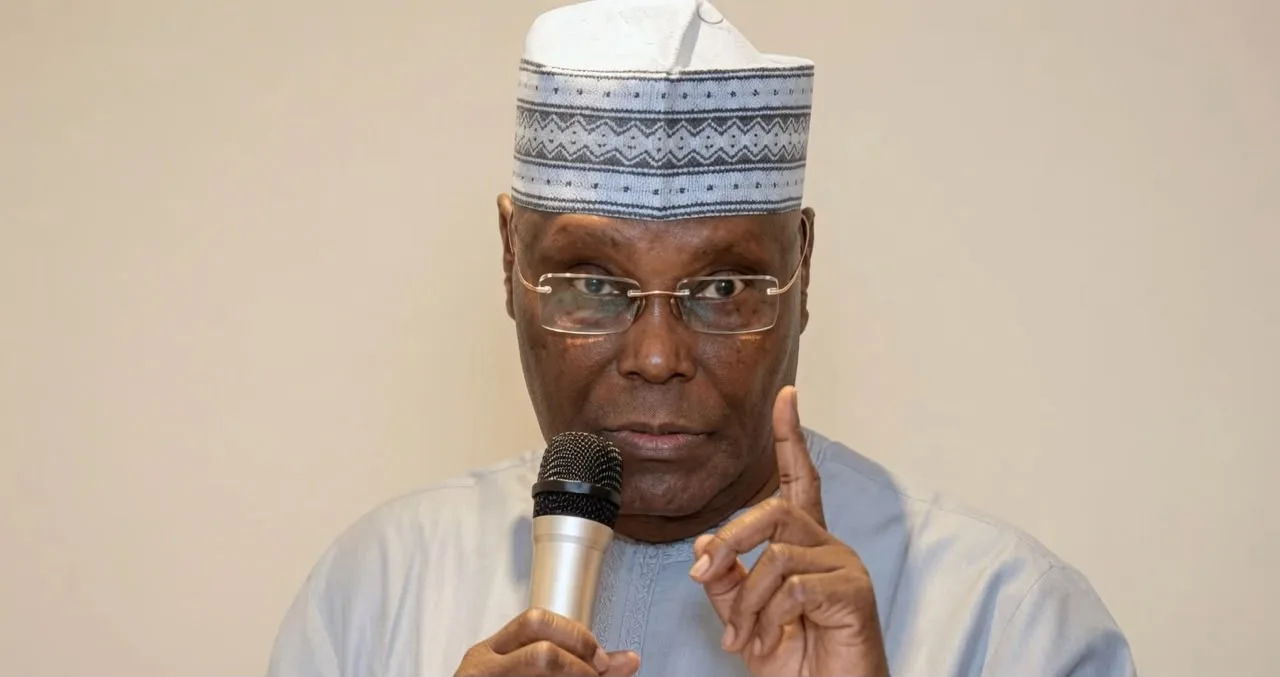
Former Vice President and African Democratic Congress (ADC) presidential candidate, Atiku Abubakar, has criticised the administration of President Bola Tinubu over its handling of Nigeria’s economy, insisting that government statistics cannot conceal the hardship facing millions of Nigerians.
Atiku argued that despite repeated assurances from the Federal Government, the economic reality experienced by ordinary citizens paints a different picture, accusing the administration of presenting misleading figures instead of addressing the country’s worsening economic challenges.
In a statement issued on Sunday by his Senior Special Assistant on Public Communication, Phrank Shaibu, the former vice president dismissed recent remarks by the Chairman of the Presidential Fiscal Policy and Tax Reforms Committee, Taiwo Oyedele, who had defended the administration’s economic reforms, including the removal of fuel subsidy, debt management and workers’ welfare policies.
According to Atiku, the government’s claim that savings from the removal of fuel subsidy are being used to reduce inherited liabilities does not align with publicly available financial records.
He maintained that rather than reducing its obligations to the Central Bank of Nigeria (CBN), the Tinubu administration had expanded its debt profile.
“At the time President Tinubu assumed office in May 2023, the Federal Government’s exposure to the CBN stood at about ₦26.9 trillion. Today, that figure has risen to over ₦40.38 trillion.
“This administration has not reduced its debt to the CBN. It has only restructured existing obligations by converting Ways and Means advances into treasury bills and bonds while continuing to accumulate fresh debt. That is debt restructuring, not debt repayment,” Atiku said.
He also cited figures reportedly disclosed by CBN Governor Olayemi Cardoso, claiming that government borrowing from the apex bank increased by ₦17.39 trillion between May 2025 and May 2026, representing a 77.6 per cent rise.
According to him, the figures contradict the government’s position that proceeds from subsidy removal are being used to lower public debt.
Atiku further questioned the administration’s claims that the subsidy savings had improved workers’ welfare, arguing that several components of the new wage package remain unimplemented.
He said the Federal Government was yet to fully implement the new national minimum wage, while the 40 per cent peculiar allowance linked to the wage adjustment, which was expected to take effect from May 1, 2026, remained unpaid.
He added that the promised wage award had also not been fully implemented, describing the complaints as concerns already raised by organised labour.
On education financing, the former vice president challenged the government’s assertion that subsidy savings were funding the Nigerian Education Loan Fund (NELFUND).
He noted that the agency’s Chief Executive Officer had previously stated that the scheme received a ₦50 billion injection from funds recovered by the Economic and Financial Crimes Commission (EFCC), questioning why the government was now attributing the funding to subsidy savings.
Atiku also blamed the administration’s economic policies for rising borrowing costs, arguing that the increase in the Monetary Policy Rate had made access to credit more difficult for manufacturers and businesses while increasing the country’s debt servicing burden.
He said the government’s continued borrowing had crowded out private sector investment and contributed to the current economic strain.
The former vice president maintained that economic indicators promoted by government officials did not reflect the realities confronting Nigerians, pointing to rising food prices, persistent inflation, business closures, unemployment, the depreciation of the naira and growing poverty.
He argued that the performance of any government should be measured by the living conditions of its citizens rather than official presentations or statistical reports.
Atiku urged the Federal Government to focus on addressing Nigeria’s economic problems with sincerity, competence and accountability instead of relying on what he described as media spin.
His comments come amid sustained exchanges between the Tinubu administration and opposition figures over the impact of major economic reforms introduced since May 2023, including the removal of fuel subsidy and the liberalisation of the foreign exchange market.
While the Federal Government insists the reforms are necessary to stabilise public finances, attract investment and strengthen the economy over time, critics argue that they have worsened inflation, increased the cost of living and weakened the purchasing power of many Nigerians.