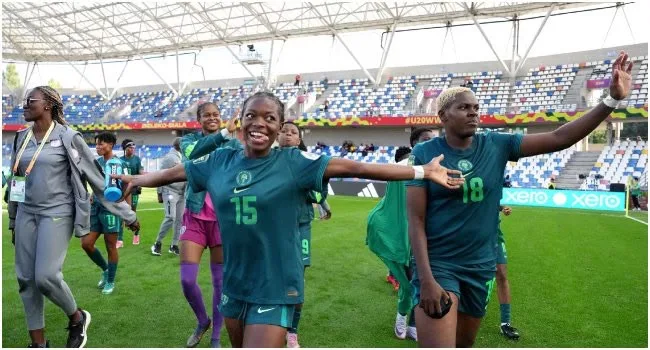
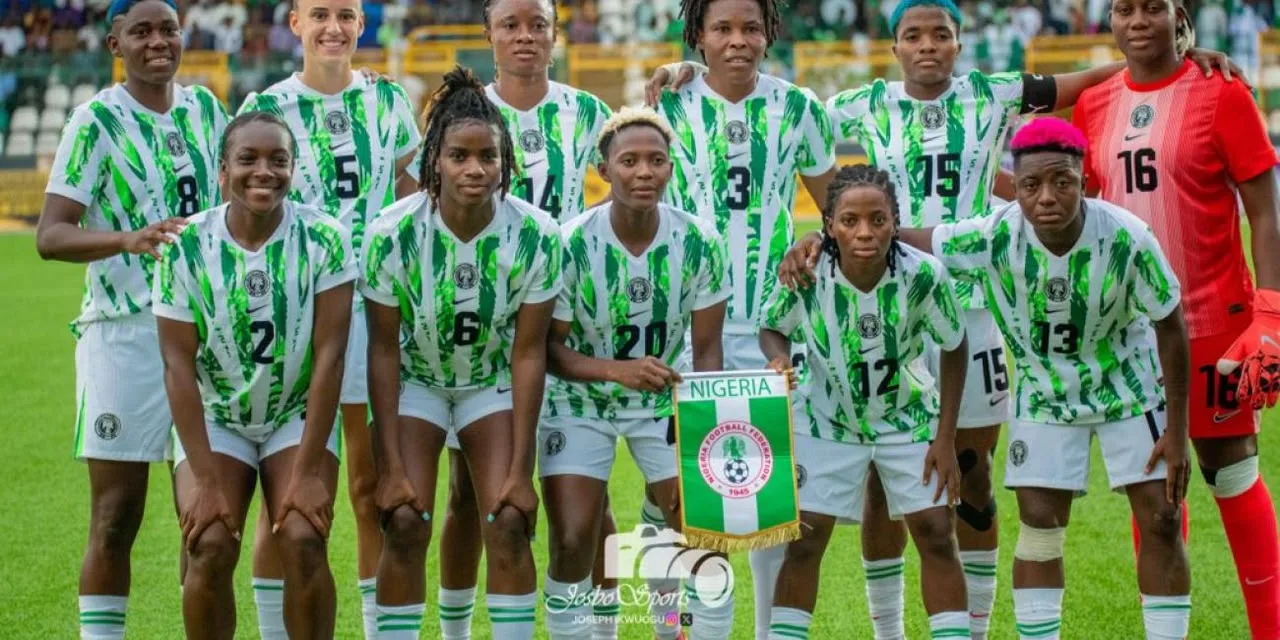
The six-member committee, chaired by Ambassador Fanny I. Amun, was established following the Super Falcons’ disappointing 2026 Women’s Africa Cup of Nations campaign in Morocco, which ended Nigeria’s hopes of defending its continental title and qualifying for the 2027 FIFA Women’s World Cup.
Other members of the panel were Alex Mana, former Super Falcons forward Desire Oparanozie, coach Ladan Bosso, former Super Eagles midfielder Mutiu Adepoju and Nasiru Jibril, who served as secretary.
In its report dated August 21, 2026, the committee said it examined several aspects of Nigerian football, including governance, financing, technical development, grassroots programmes and league administration.
The panel said its broader objective was to identify the underlying causes of Nigeria’s recent struggles in international competitions and develop a sustainable framework for rebuilding the sport.
Contrary to concerns about player influence within the Super Falcons, the committee said it found no evidence that individual players dictated team selection or technical decisions.
It also reported that there was cooperation among the players and no indication that any individual had control over selection matters.
However, the panel raised concerns about the structure and relationship between the technical team and other personnel, particularly the roles and reporting lines of analysts.
It recommended that duties relating to player performance, loyalty and team management be clearly assigned within the technical department to eliminate confusion and overlapping responsibilities.
Camp administration also came under scrutiny, with the committee questioning the manner in which some officials reportedly gained access to the team’s camp.
It recommended stronger camp-management procedures and a clearer separation between administrative responsibilities and the work of the technical team.
The panel also looked into the absence of defender Ashleigh Plumptre during the tournament, amid questions surrounding her availability.
It found that the player had undergone surgery and was not medically cleared to participate. The committee said medical personnel from both the Nigerian national team and her foreign club confirmed her condition.
The panel therefore found no indication that her absence was connected to a disagreement
over selection.
Beyond the Falcons, the committee said the problems confronting Nigerian football were systemic and required reforms across both the men’s and women’s game.
It called on the NFF to establish a structured and long-term approach to team management and player development instead of relying heavily on short-term or improvised solutions.
The committee further recommended regular training and retraining for administrative and technical personnel, including staff at the NFF secretariat.
On football administration, the panel called for improved data management and verification systems to prevent inconsistencies in player records.
It also recommended greater use of technology in areas such as player identification, registration and age verification.
According to the committee, technological investment could also improve the overall administration of the game and create opportunities for attracting additional funding.
The women’s football league was another area highlighted by the panel, which called for stronger institutional backing and better use of opportunities and structures available within the men’s game.
It also urged the government and private sector to rethink their approach to supporting football, arguing that funding must be more sustainable and aligned with the developmental needs of players, clubs, leagues and national teams.
The committee recommended stronger regulations and effective oversight across the football sector, including player management and training activities.
It said consistent enforcement of regulations would help address some of the administrative and technical shortcomings affecting the country’s football development.
The panel stressed that Nigeria’s recent failures could not be blamed on one person or a single issue. Instead, it identified a combination of weaknesses involving administration, technical management, player development, camp operations, regulation, data systems, league structures, funding and institutional capacity.
It consequently urged the NFF to implement reforms across the entire football ecosystem rather than focusing only on the performance of national teams at major competitions.
The recommendations followed a particularly disappointing campaign for the Super Falcons.
Nigeria entered the 2026 WAFCON as defending champions but suffered a 3-2 group-stage defeat to Malawi before losing 1-0 to Cameroon in the quarter-finals.
The quarter-final exit ended Nigeria’s record of reaching at least the semi-finals in every previous edition of the competition and placed the team’s qualification hopes for the 2027 Women’s World Cup in serious difficulty.
The Falcons later received another opportunity through the African qualification playoff but were defeated 2-1 by South Africa on August 13, ending Nigeria’s hopes of appearing at the World Cup.
The outcome marked the first time the Super Falcons failed to qualify for the FIFA Women’s World Cup.
The setback sparked widespread criticism of the NFF and the management of the national team, eventually leading to the removal of head coach Justine Madugu and his technical team.
The committee’s findings now place the spotlight on wider structural issues within Nigerian football, with the panel advocating long-term reforms aimed at improving administration, developing players, strengthening domestic competitions and restoring Nigeria’s competitiveness on the international stage.