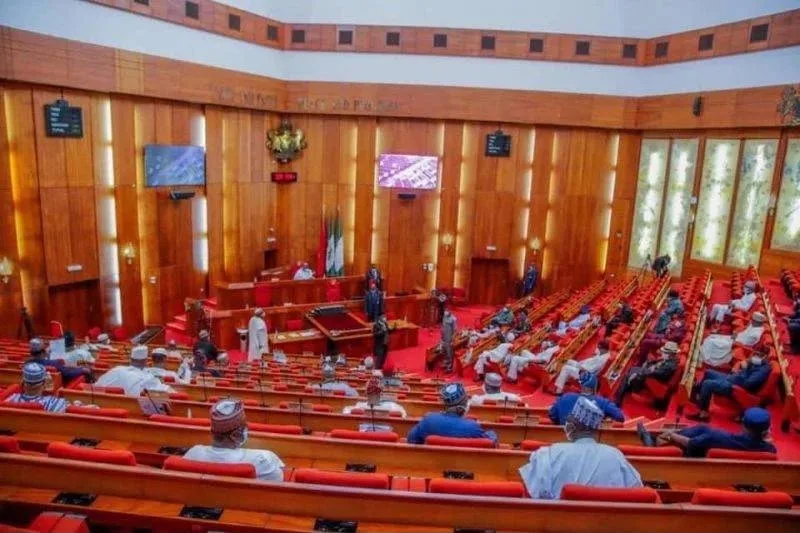

The National Assembly has forwarded the Constitution Alteration Bill seeking the establishment of State Police Services to the 36 State Houses of Assembly for consideration and approval.
The Clerk to the National Assembly, Kamoru Ogunlana, transmitted the bill on Wednesday, September 16, 2026, following a directive from the leadership of the federal legislature.
Ogunlana said the state legislatures are expected to consider the proposed amendment and communicate their decisions to the National Assembly within 30 days of receiving the document.
He, however, explained that the 30-day period was an administrative arrangement aimed at ensuring an orderly legislative process and does not constitute a constitutional deadline, as the 1999 Constitution does not specify a timeframe for state assemblies to respond to constitutional alteration bills.
The transmission represents a significant step in the constitutional process required to introduce State Police Services in Nigeria.
Under Section 9 of the 1999 Constitution, constitutional alteration bills require approval by at least two-thirds of the State Houses of Assembly. Consequently, at least 24 of the 36 state legislatures must approve the proposal for the process to advance.
The proposed amendment would establish a two-tier policing structure consisting of the Federal Police Service and State Police Services.
Under the proposed framework, individual states would be empowered to establish their own police services through legislation passed by their respective Houses of Assembly. Such services would operate within a constitutional framework and comply with national minimum standards established by the National Assembly.
The Federal Police Service would retain responsibility for policing matters under federal jurisdiction and would continue to provide policing services in a state until its State Police Service becomes operational.
State Police Services, when established, would be responsible for enforcing state laws, maintaining public safety and order, preventing and detecting offences within their jurisdictions, and protecting lives and property.
The bill also proposes national standards covering recruitment, training, certification, appointments, promotions, discipline, use of force, firearms, custody, complaints, criminal intelligence, intergovernmental cooperation, public reporting and accountability.
The development follows months of legislative consideration of proposals to decentralise policing in response to Nigeria’s security challenges.
The Senate passed a constitutional amendment proposal on State Police in June, while the House of Representatives also considered legislation on the issue. The House later rescinded its earlier version after President Bola Tinubu transmitted an Executive Bill on State Police to the National Assembly, prompting lawmakers to consider the new framework.
The proposed system is intended to give states greater responsibility in addressing security concerns within their jurisdictions while maintaining federal oversight of national policing standards and federal security responsibilities.
The bill further contains provisions aimed at regulating cooperation between federal and state police authorities, including requirements for national standards and accountability mechanisms.
Ogunlana said the National Assembly recognised the constitutional role and independence of the State Houses of Assembly in considering the proposed amendment.
He urged the state legislatures to deliberate on the bill in line with their respective legislative procedures and forward their resolutions to the National Assembly after completing their consideration.
The Clerk added that the 30-day administrative timeframe was designed to facilitate the timely conclusion of the amendment process and should not be interpreted as a constitutional requirement.
He said the National Assembly would proceed with the next stages of the process after receiving the decisions of the state legislatures, while reaffirming its commitment to constitutional procedures, due process and cooperation among the relevant legislative institutions.