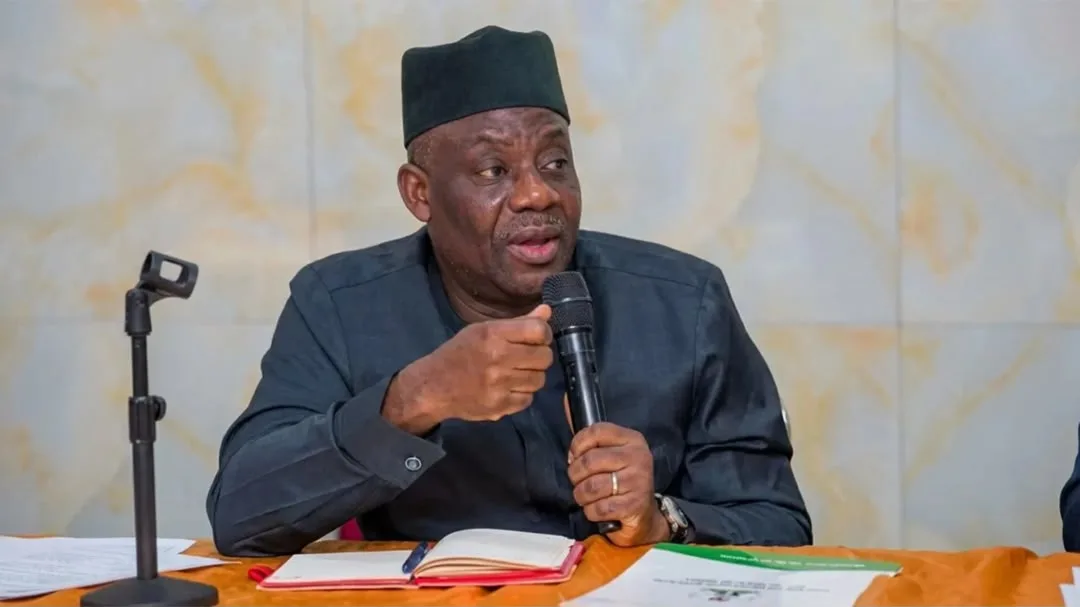

The Minister of Education, Dr. Tunji Alausa, has directed all vice-chancellors, rectors and provosts of tertiary institutions across the country to immediately expel any student found guilty of kidnapping or related criminal offences after a thorough investigation.
The directive was announced during a meeting with the Pro-Chancellor, Governing Council members and management of the Federal University of Lafia (FULafia) in Abuja. It was contained in a statement issued by the minister’s Special Adviser on Media and Communications, Ikharo Attah.
In addition to disciplinary measures, Alausa instructed tertiary institutions to strengthen their internal intelligence networks and work more closely with the Department of State Services (DSS) and other security agencies to improve campus security and protect students.
“If you tolerate bad behaviour for too long, it becomes a culture. Any student found culpable, after due investigation, of planning or participating in the kidnapping of fellow students has no place in our tertiary institutions. Such individuals must be dismissed. Our campuses must never become safe havens for criminal elements. Government has a duty to protect innocent citizens and preserve our institutions as centres of learning and excellence,” the minister stated.
Although he maintained that Nigerian universities, polytechnics and colleges of education remain generally safe, Alausa said recent cases involving students outside school premises have highlighted the need for stronger intelligence gathering and improved collaboration with security agencies.
“We have a collective responsibility to protect every Nigerian child, from primary school to tertiary education. While our campuses remain safe, we must continue to strengthen intelligence gathering and work closely with our security agencies to ensure that students are protected both within and outside our institutions,” he said.
The minister also disclosed that he recently met with the Minister of Defence, General Christopher Musa (Rtd.), to develop a coordinated approach aimed at reinforcing the Safe Schools Initiative and improving the security of students nationwide.
He praised President Bola Tinubu for supporting security reforms and educational development, saying the administration remains committed to providing a secure environment where Nigerian students can access quality education.
Alausa further reiterated President Tinubu’s position that government institutions must not negotiate with kidnappers or pay ransom, warning that such actions encourage criminal activities and weaken the fight against insecurity.
He therefore directed governing councils and management of tertiary institutions to establish effective security intelligence systems, maintain close cooperation with the DSS and other law enforcement agencies, and take firm action against anyone who poses a threat to students’ safety.
On infrastructure, the minister announced that the Federal Government will provide funding for security-related projects in tertiary institutions under the 2027 intervention of the Tertiary Education Trust Fund (TETFund). The projects will include perimeter fencing and other critical security facilities, while institutions were advised to submit their proposals early.
He also reaffirmed the government’s commitment to expanding the Energising Education Programme in partnership with the Federal Ministry of Power, noting that institutions facing electricity shortages would benefit from the expansion of solar power infrastructure, including increased generation capacity and battery storage.
Earlier, the Pro-Chancellor of the Federal University of Lafia, Lola Akande, appreciated the Federal Government for its continued support to the institution. She identified inadequate hostel accommodation, poor electricity supply at Campus Two and security concerns as some of the university’s major challenges.
Akande also revealed that some students were suspected of participating in kidnapping activities carried out outside the university, adding that recent incidents had raised serious concerns. She stressed that the institution strongly opposes the payment of ransom to kidnappers, warning that doing so only encourages further criminal activities.