
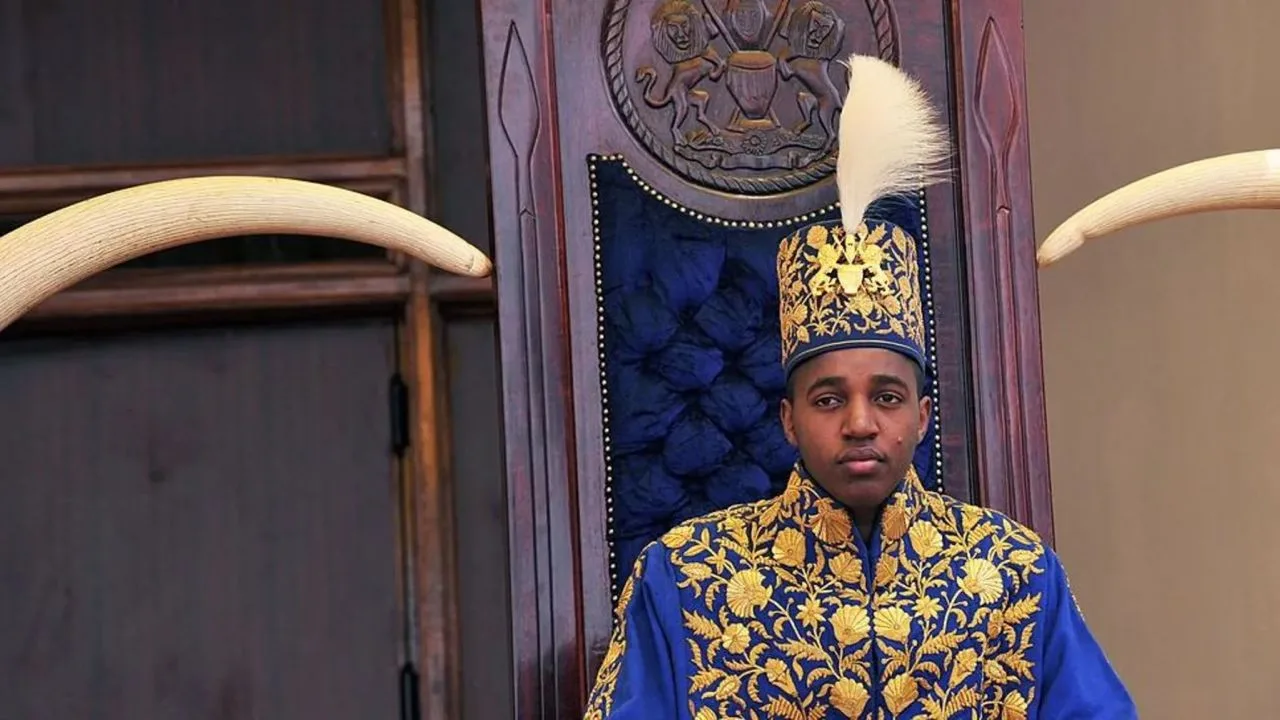
The 34-year-old monarch, who was recognised by Guinness World Records as the world’s youngest reigning king, died last week after undergoing treatment for an aggressive form of cancer.
His body arrived at Entebbe Airport, where President Yoweri Museveni joined government officials, royal representatives and mourners to pay their final respects.
A brief ceremony was held at the airport before the coffin was transported by military helicopter to Kyegegwa in western Uganda, the heartland of the Tooro Kingdom. It was later conveyed by road to the royal residence in Fort Portal.
The return of the monarch’s
remains marks the start of a nine-day period of official mourning observed by the Tooro Kingdom.
King Oyo’s body will lie in state at Karuziika Palace, allowing members of the public to pay their respects. Prayer sessions will also be held at the palace each evening ahead of the funeral.
Oyo became king in 1995 at just three years old following the death of his father. He was formally crowned in 2010 when he turned 18, becoming the 13th monarch of the Tooro Kingdom, an institution with roots dating back to the 19th century and a population of more than two million people.
Although Uganda operates under an elected government, its traditional kingdoms continue to play an important cultural and historical role despite having no constitutional political authority.
Ugandan lawmakers on Thursday held a special parliamentary session to honour the late monarch, describing him as a progressive traditional leader who promoted education, healthcare and opportunities for young people.
Prime Minister Robinah Nabbanja praised King Oyo as a unifying figure and highlighted his efforts to promote awareness of HIV and AIDS among young Ugandans.
Members of the opposition also joined in paying tribute, with acting opposition leader Patrick Nsamba Oshabe describing the late king as a monarch who successfully balanced cultural heritage with development.
President Museveni has directed that King Oyo receive an official state burial. National flags will also be flown at half-mast for three days during the funeral period.
The monarch is scheduled to be buried on September 12, coinciding with the date he had hoped to mark his coronation anniversary through the traditional Empango celebrations.
A church service will precede the burial before the king’s remains are taken in a traditional procession to the Karambi Royal Tombs. His burial is expected to be completed by 2pm local time, in keeping with Tooro customs that prohibit the burial of kings in the evening.
Meanwhile, questions surrounding the succession of the Tooro throne have emerged following revelations that King Oyo was not formally married but may have left behind a son.
The Tooro Kingdom’s Prime Minister, Calvin Armstrong Rwomiire Akiiki, said the late monarch had a young son, adding that details about the child would be disclosed at an appropriate time in accordance with royal traditions.
President Museveni has also said King Oyo’s mother, Queen Best Kemigisa, informed him that her son had left an heir.
The claim, however, has generated disagreement within the royal family. Charles Kamurasi, head of the Babiito royal clan from which Tooro kings are traditionally selected, said he had no knowledge of the reported child.
Some members of the royal clan have similarly questioned why they were not informed about the alleged heir.
Akiiki has appealed for restraint, saying the matter should be addressed privately through discussions with the kingdom’s elders.
He warned that statements made during a period of grief could create divisions that might be difficult to resolve.
The Ugandan government has also cautioned the public against spreading unverified claims about the succession, particularly on social media.
Culture Minister Henry
Tumukunde urged citizens to rely on official statements from the government and the Tooro Kingdom, stressing the need for respect during the mourning period.
The Tooro monarchy operates under a hereditary system, with the king traditionally chosen from the Babiito royal clan.