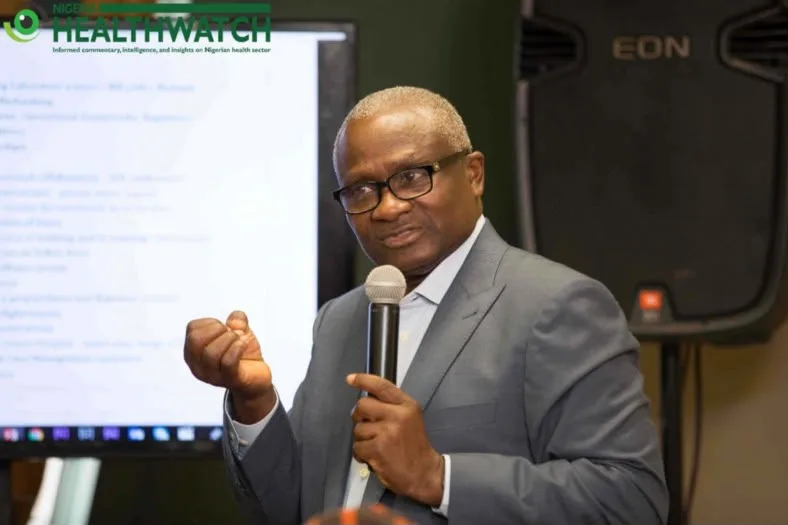

The Minister of Health and Social Welfare, Prof. Ali Pate, has confirmed that Nigeria’s first imported Ebola patient and her husband have arrived safely in Switzerland, where they are receiving medical attention and undergoing isolation measures.
Pate disclosed this in an update on his X handle on Monday evening, stating that the patient had been admitted to Geneva University Hospitals, while her husband was placed in isolation at University Hospital Zurich.
He said Swiss authorities had confirmed their safe arrival and expressed appreciation for the medical care provided by Nigerian health professionals and the cooperation between Nigeria, Switzerland and the World Health Organisation (WHO), which facilitated the evacuation.
According to the minister, Switzerland’s Federal Councillor, Elisabeth Baume-Schneider, conveyed the country’s gratitude during a telephone conversation.
“In our telephone conversation, Federal Councillor Elisabeth Baume-Schneider conveyed Switzerland’s appreciation for the care provided by Nigerian health professionals and the close cooperation between our authorities and WHO that made the evacuation possible,” he said.
Pate commended the medical and public health teams in both countries, as well as the Nigeria Centre for Disease Control and Prevention (NCDC), the Swiss Federal Office of Public Health, the Swiss Federal Department of Home Affairs and the WHO for their coordinated response.
He wished the patient continued recovery and assured Nigerians that efforts to contain the infection remained ongoing.
“Here in Nigeria, contact monitoring, investigation of alerts and other containment measures continue, with support from Africa CDC and WHO AFRO. We will provide regular updates through NCDC and the Federal Ministry of Health and Social Welfare,” the minister stated.
Earlier on Monday, Pate disclosed that the evacuation was conducted with his approval after the patient’s condition had improved significantly.
He said the patient was stable, conscious and able to communicate, while her laboratory test results were approaching baseline levels.
However, the minister cautioned that the improvement in her condition did not necessarily mean she was no longer infectious, stressing that strict public health protocols were observed throughout the evacuation.
The Federal Government confirmed Nigeria’s first imported Ebola virus disease case in the Federal Capital Territory on October 20, following the patient’s recent travel from Uganda.
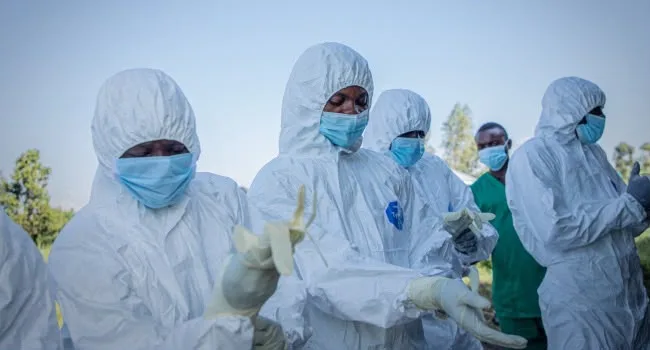
The infection was identified as the Bundibugyo strain of the Ebola virus, prompting Nigerian health authorities to activate emergency response measures, including contact tracing, surveillance and monitoring of potentially exposed individuals.
Initial reports from the government indicated that 44 contacts had been identified. A subsequent WHO update increased the number of people being monitored in Nigeria to 52, in addition to the patient’s husband.
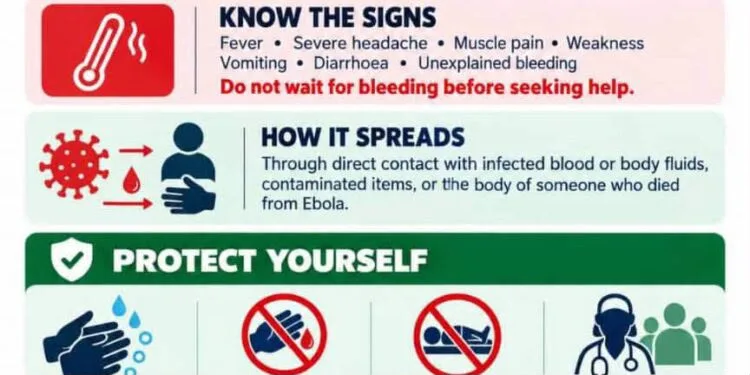
Ebola is a severe viral disease transmitted through direct contact with the blood or other bodily fluids of an infected person, as well as contaminated materials. Symptoms may include fever, fatigue, vomiting and diarrhoea, with severe cases potentially resulting in internal or external bleeding.
The incubation period can extend to 21 days, making continued monitoring of contacts essential even after an infected person has been evacuated for treatment.