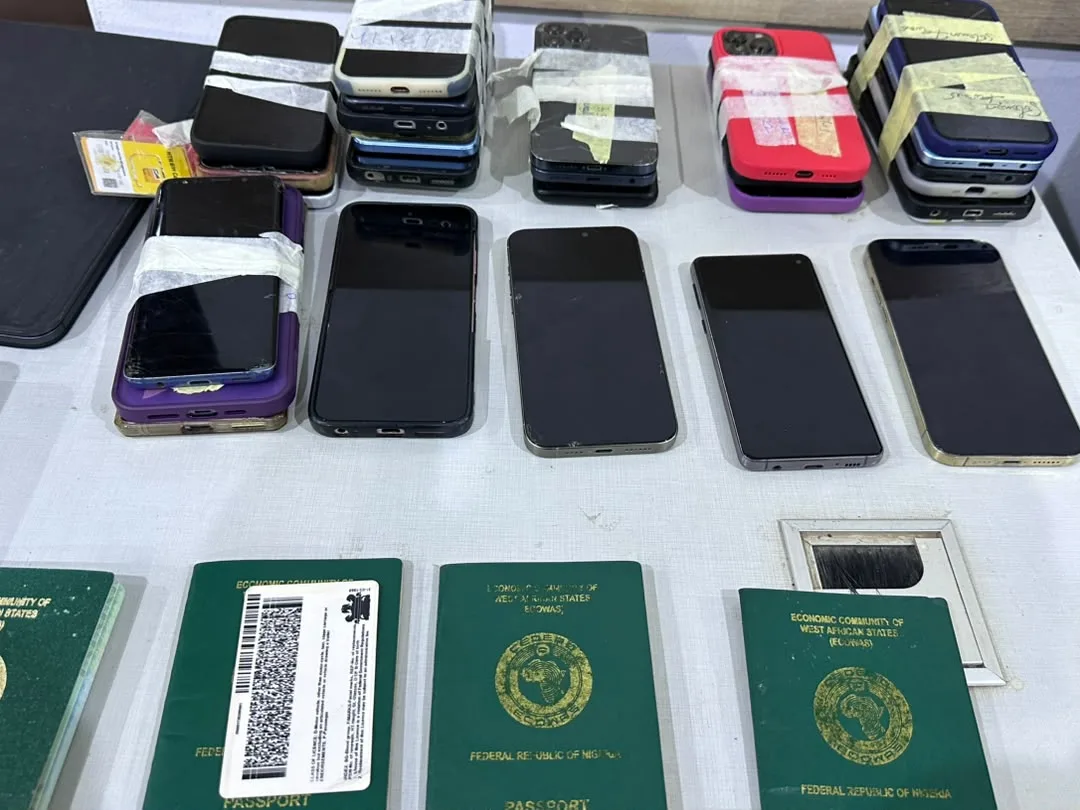
The Nigeria Police Force National Cybercrime Centre (NPF-NCCC) has arrested nine suspects over international cybercrime operations involving investment fraud, romance scams, identity theft, sextortion and money laundering, including the impersonation of Tesla Chief Executive Officer Elon Musk.
The arrests followed separate intelligence-led operations in Delta and Lagos states, conducted in collaboration with international law enforcement agencies, including the United Kingdom’s National Crime Agency, the Royal Canadian Mounted Police and Germany’s Federal Criminal Police Office.
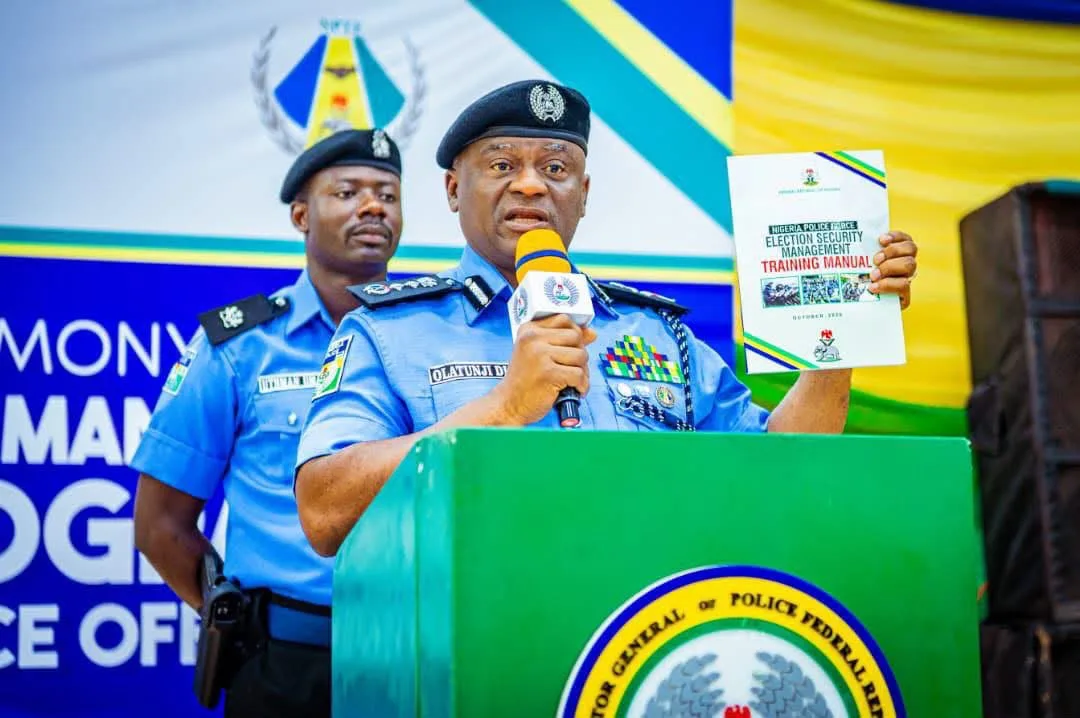
The Assistant Inspector-General of Police and Director of the NPF-NCCC, AIG Akaninyene Ezima, disclosed this on Friday during a press briefing at the Centre’s conference hall in Abuja.
Ezima said the suspects targeted victims in several countries, including the United States, United Kingdom, Canada, Australia and Indonesia, using fake social media identities, fraudulent investment websites and cryptocurrency transactions.
In the first operation, four suspects were arrested in Agbor and Okpanam, Delta State, over online investment fraud and other cyber-enabled crimes.
The suspects were identified as Ojei Divine, Godwin Umerin, Edema Bright and Peter Kpamichukwu Okoh.
According to the police, Divine impersonated investment professionals on Facebook and directed victims to fraudulent websites offering investment opportunities in foreign exchange, cryptocurrency, and oil and gas.
Investigators traced 21 cryptocurrency transactions valued at $21,150 to a wallet linked to him, while cryptocurrency assets worth $15,900 were recovered and secured in a custodial wallet.
Umerin was linked to the defrauding of an Indonesian citizen who transferred seven million Indonesian rupiah through an account provided by a money mule.
Bright, a 300-level student of Delta State University, was connected to sextortion and cryptocurrency investment schemes targeting victims in several countries. Police said he also impersonated Galaxy Digital Chief Executive Officer Michael Novogratz to persuade victims to invest in Bitcoin.
The fourth suspect, Okoh, a website developer operating under the name 360 Web Tech, admitted developing six websites used by fraudsters, according to the police.
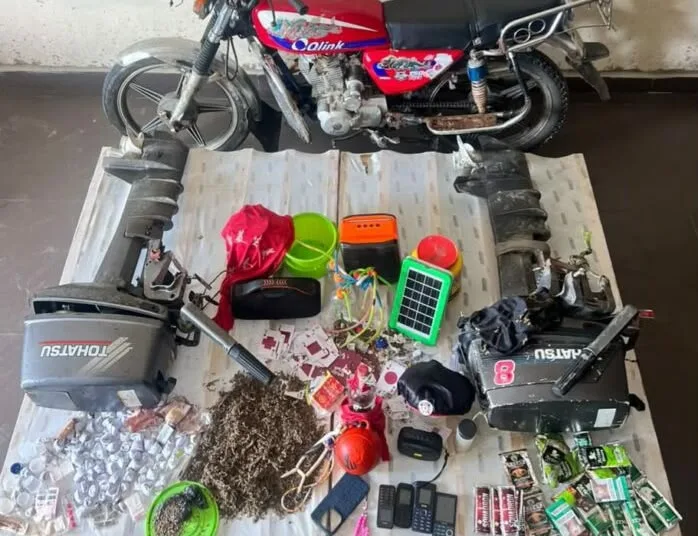
Thirty-six mobile devices, three internet routers and other exhibits were recovered during the operation.
In a separate investigation conducted with Canadian and German law enforcement agencies, police arrested two suspects, Uka Chidiebere Gerald, 32, and Kenneth Ufuophu, 30, in Delta State over a romance fraud network that targeted elderly Canadians between 2020 and 2024.
The police said members of the network used fictitious online identities to establish romantic relationships with victims before soliciting money under the guise of investments, financial assistance and loans.
In one case, a victim transferred more than CA$200,000 between 2020 and 2022 after being deceived by a fraudster posing as a United States military physician.
Investigators linked the transactions to Gerald and traced cryptocurrency transactions totalling 1,684,441 USDT through a Binance wallet opened using his wife’s email address and telephone number, with her consent, according to the police.
Another victim was induced to transfer CA$214,000 in cryptocurrency and an additional CA$3,000 through a wire transfer. The digital assets were traced to wallets linked to Ufuophu.
The police said five victims had been identified, with documented losses suffered by two victims alone exceeding CA$417,000.
Two mobile phones and two laptops were recovered from the suspects.
In the third operation, three suspects were arrested in Lekki, Lagos State, on October 14, 2026, over online impersonation and fraudulent cryptocurrency investment activities.
They were identified as Adebayo Adewale Basit, 23, Omoregie Christian and Adebayo Ibrahim.
Police investigations linked Basit to the impersonation of Tesla Chief Executive Officer Elon Musk through social media accounts, email addresses and messaging platforms. Investigators said he used artificial intelligence voice cloning and deepfake technology to communicate with victims, particularly in the United States and United Kingdom.
The suspects were also linked to an investment scheme operating through a platform identified as Bitcoin Trading Hub.
Items recovered included five iPhones, a Samsung Galaxy phone, an iPad, a Microsoft Surface Pro tablet, three internet routers and other electronic devices.
The police said the recovered devices were undergoing forensic examination to identify victims, trace the proceeds of crime and establish whether other individuals were involved.
Ezima said investigations into the three cases were ongoing, with efforts focused on identifying other members of the criminal networks, tracing illicit funds and bringing those found culpable to justice.
He urged Nigerians to exercise caution when engaging with online investment platforms and individuals who request money through deceptive online relationships, cryptocurrency transfers or other suspicious financial arrangements.
The police chief also cautioned young people against cybercrime, urging them to channel their digital skills into legitimate innovation, entrepreneurship and national development.
He reaffirmed the NPF-NCCC’s commitment, under the leadership of Inspector-General of Police Olatunji Rilwan Disu, to strengthening cybercrime investigations and international cooperation.
The Centre further encouraged victims and members of the public to promptly report cybercrime incidents and suspicious financial transactions to the appropriate authorities.