The Independent National Electoral Commission (INEC) has announced plans to hold a nationwide mock accreditation exercise in November 2026 as part of measures to strengthen preparations for the 2027 general elections.
The exercise will focus on testing the Bimodal Voter Accreditation System (BVAS) and other election-related equipment, with the aim of identifying and resolving possible technical and operational challenges before election day.
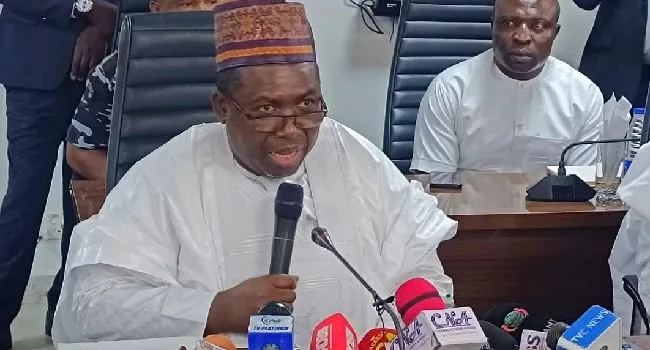
INEC Chairman, Joash Amupitan, disclosed this on Friday during a meeting with a delegation from the Canadian High Commission led by Canada’s Chargé d’Affaires to Nigeria, David Sproule, at the Commission’s headquarters in Abuja.
Amupitan explained that the mock accreditation exercise is one of five major priorities adopted by the Commission ahead of the 2027 polls.
According to him, the priorities also include building on technological improvements, expanding voter participation, strengthening the Commission’s institutional and technical capacity, and tackling misinformation while protecting the credibility of the electoral process.
The INEC chairman said recent elections had provided valuable opportunities to test and improve the country’s electoral system.
He pointed to the Anambra governorship election, FCT Area Council elections and Ekiti governorship election as examples of exercises that helped the Commission assess its reforms and operational readiness.
Amupitan also described the August 15, 2026, Osun State governorship election as an important benchmark for future elections. He said 3,556 out of the 3,763 polling units, representing 94.5 per cent, commenced accreditation and voting by 8:30 a.m.
He added that the election recorded strong BVAS performance, smooth transmission of results through the IReV portal and effective response to emerging challenges.
Looking ahead to the 2027 elections, Amupitan said INEC would need about 1.4 million ad-hoc staff to manage operations across more than 176,000 polling units nationwide.
He further revealed that the Commission had created a dedicated Artificial Intelligence Unit to examine how AI could be responsibly deployed in areas including voter registration, data management and results transmission.
The unit will also work on measures to prevent the misuse of AI, particularly in the production and spread of deepfakes and election-related disinformation.
Amupitan said INEC would attend the Global Conference on Responsible AI and Elections, scheduled to take place in Ottawa, Canada, from September 9 to 11, 2026. The conference is expected to focus on responsible AI applications in elections and emerging threats to electoral integrity.
The INEC chairman reiterated the Commission’s commitment to remaining independent and politically neutral, assuring the Canadian delegation of its determination to uphold democratic principles and electoral credibility.
For its part, the Canadian delegation reaffirmed Canada’s willingness to support Nigeria’s democratic development, particularly in voter participation, women’s involvement in elections, public enlightenment, technical support and election observation.
The 2027 presidential and National Assembly elections are scheduled for January 16, 2027, while governorship and State House of Assembly elections will take place on February 6, 2027.
Campaigns for the presidential and National Assembly elections commenced on Wednesday, while campaigns for governorship and State House of Assembly contests are expected to begin on September 9, 2026.