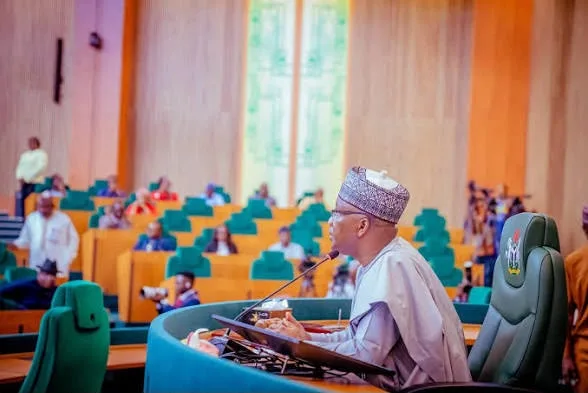
Nigeria's House of Representatives has commenced the consideration of the Executive Bill on the establishment of State Police transmitted to the National Assembly by President Bola Tinubu on July 14th as part of ongoing efforts to strengthen Nigeria’s internal security architecture
House Deputy Speaker and Chairman of the Constitution Review Committee, Benjamin Kalu, disclosed that the House may adopt the version of the bill already passed by the Senate, with only minor adjustments where necessary.
Kalu explained that the House had to withdraw its version of the bill passed on June 11 before proceeding on recess to allow lawmakers to consider the President’s proposal.
The deputy speaker argued that given the critical nature of national security, the President was best positioned to propose comprehensive legislation capable of addressing the country’s prevailing security challenges.
According to him, the Executive Bill, which has passed first and second readings in the House, received broad stakeholder support during a security roundtable held during the National Assembly Open Week, saying it effectively served as the required public hearing and fulfils the constitutional and legislative requirements for its consideration.
Kalu described the proposed State Police legislation as one of President Tinubu’s signature constitutional reform initiatives, noting that the President had consistently championed the establishment of a multi-layered policing system long before assuming office.
He stressed that although the Executive, Legislature and Judiciary operate as separate arms of government, they remain united in pursuing national objectives, particularly the protection of lives and property.
He noted that lawmakers convened on a Monday outside the House’s traditional Tuesday parliamentary sitting not for convenience but because of the urgency of the nation’s security situation demanded swift legislative action.
Explaining the committee’s assignment, the Deputy Speaker said members would undertake a clause-by-clause consideration of the Executive Bill, using the Senate-passed version as the primary working document.
Kalu also disclosed that both chambers of the National Assembly were working in close collaboration to fast-track the constitutional amendment process, expressing optimism that once transmitted to the President, the bill would receive prompt presidential assent.
He observed that the Executive Bill is substantially similar to previous versions already considered by the National Assembly, with only limited modifications, adding that the Senate also introduced about eight minor amendments, which the House Committee would carefully examine with a view to adopting them where appropriate.