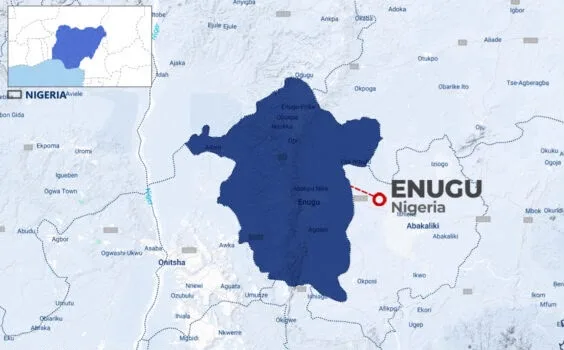
The Enugu State Government has dismissed reports of a confirmed diphtheria case in the state, saying investigations into a suspected case at the University of Nigeria Teaching Hospital (UNTH) did not establish the disease.
The Commissioner for Health, Professor George Ugwu, said the patient was instead suspected to have tonsillitis following medical evaluation.
Ugwu assured residents that the state’s health authorities were closely monitoring the situation through the Public Health and Surveillance Unit to ensure that any suspected case is detected and addressed promptly.
He urged residents to remain calm and refrain from circulating rumours or unverified information about diphtheria in the state.
The commissioner advised anyone experiencing symptoms including fever, sore throat, difficulty swallowing, cough, breathing difficulties, neck swelling or the development of a greyish-white membrane in the throat to seek medical attention without delay.
He also called on parents and guardians to ensure that children receive all recommended vaccinations containing diphtheria protection, including the pentavalent vaccine.
Ugwu further urged healthcare workers to promptly notify the relevant authorities whenever they encounter suspected cases and to maintain proper infection prevention and control measures.
Diphtheria is a vaccine-preventable bacterial infection caused by Corynebacterium, which can produce a toxin capable of affecting the throat, nose, heart, nerves and kidneys.
The disease is primarily transmitted through respiratory droplets, although contact with infected sores, contaminated clothing and other objects can also facilitate its spread.
Symptoms may include mild fever, sore throat, swollen neck glands and difficulty breathing.
The clarification comes amid confirmed diphtheria cases reported in several parts of Nigeria. The Nigeria Centre for Disease Control and Prevention (NCDC) has identified Kano, Kaduna, Katsina, Borno, Bauchi, Plateau, Sokoto and Zamfara as the eight states accounting for the vast majority of confirmed cases, with 68 per cent of cases recorded among unvaccinated people based on available data.
Lagos State has also reported confirmed cases in 2026, with the state government previously disclosing 53 suspected cases.