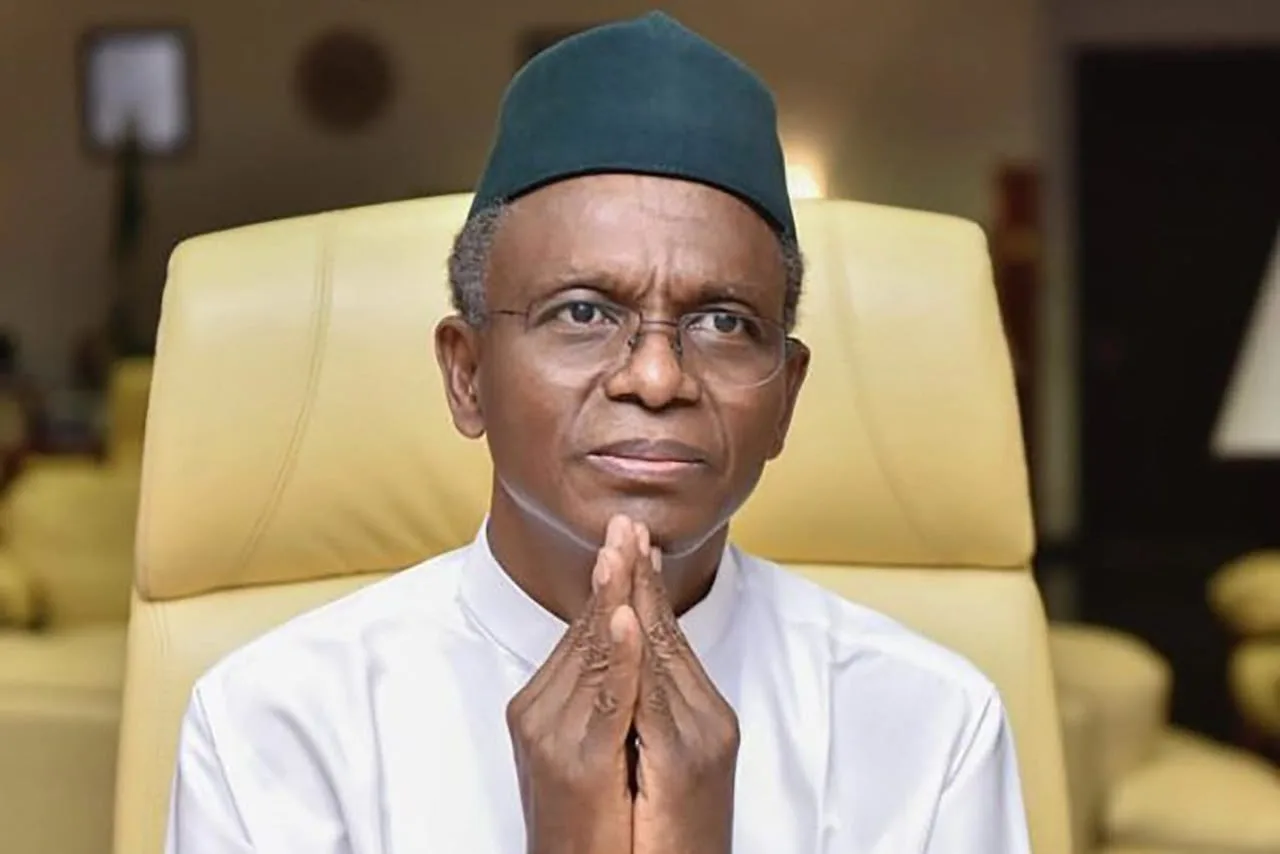
Former Kaduna State Governor Nasir El-Rufai has denied any involvement in the alleged interception of telephone conversations belonging to the National Security Adviser, Nuhu Ribadu, insisting that his previous comments on the issue were exaggerated political statements.
El-Rufai stated this on Wednesday while opening his defence before the Federal High Court in Abuja, where he is standing trial on five counts relating to the alleged unlawful interception of the NSA’s communications.
Testifying through his counsel, Paul Erokoro, a Senior Advocate of Nigeria, the former governor told the court that he neither possessed surveillance equipment nor had the technical expertise to intercept telephone communications.
He also denied having access to Ribadu’s communication devices or networks, maintaining that his earlier remarks were not an admission of involvement in any illegal surveillance activity.
Explaining his use of the word “we” in the controversial statement, El-Rufai said he was referring to opposition politicians rather than suggesting that he personally participated in the alleged interception.
“I used ‘we’ to refer to opposition politicians. When I said ‘tapped’, it was an embellishment intended to make the government feel the pain we are feeling. It was rhetorical and exaggerated. My objective was to engage in political retort and linguistic flourish,” he told the court.
The former governor is facing charges instituted by the Federal Government over allegations that Ribadu’s telephone communications were unlawfully intercepted.
The initial three-count charge was filed on February 16, 2026, with the prosecution alleging that El-Rufai and other individuals used surveillance equipment to intercept the NSA’s conversations.
He was also accused of having knowledge of those allegedly responsible for the interception but failing to report them to the appropriate security agencies.
Another allegation accused him and others of deploying technical systems in a manner capable of compromising public safety and national security.
The charges were brought under the Cybercrimes (Prohibition, Prevention, etc.) (Amendment) Act, 2024, and the Nigerian Communications Act, 2003.
The case encountered several delays before his arraignment. On February 25, the court declined to entertain his bail application, ruling that it was premature because he had not yet been formally arraigned.
The proceedings were also delayed after the State Security Service failed to produce him in court while he was in the custody of the Independent Corrupt Practices and Other Related Offences Commission.
He was eventually arraigned on April 23, when the prosecution replaced the original three-count charge with an amended five-count charge. El-Rufai pleaded not guilty to all the allegations.
On May 18, the court admitted him to bail in the sum of N100m, with a requirement to provide a surety who must be a federal civil servant not below Grade Level 17.
The surety was also required to reside in Maitama or Asokoro, Abuja, and deposit the original Certificate of Occupancy of a landed property with the court.
Other conditions included the submission of salary records, bank authentication, tax clearance documents and an affidavit of means.
The court further directed El-Rufai to surrender his international passports and report to the SSS headquarters on the last Friday of every month for attendance registration.
Despite the bail approval, the former governor remained in detention after failing to fulfil some of the conditions. An application by his lawyer seeking a relaxation of the requirements was subsequently rejected by the court on June 23.
El-Rufai later filed a no-case submission, arguing that the prosecution had failed to establish sufficient evidence against him.
However, on October 26, the court dismissed the application, holding that the evidence presented by the prosecution required him to enter his defence.
The former governor is also facing separate corruption-related proceedings instituted by the ICPC before courts in Kaduna State and Abuja.
The anti-corruption agency has accused him of offences including abuse of office, alleged diversion of public funds, money laundering, irregular contract awards and approval of payments for projects allegedly not executed during his administration between 2015 and 2023.
El-Rufai has denied the allegations in the telephone interception case, which remains before the Federal High Court.