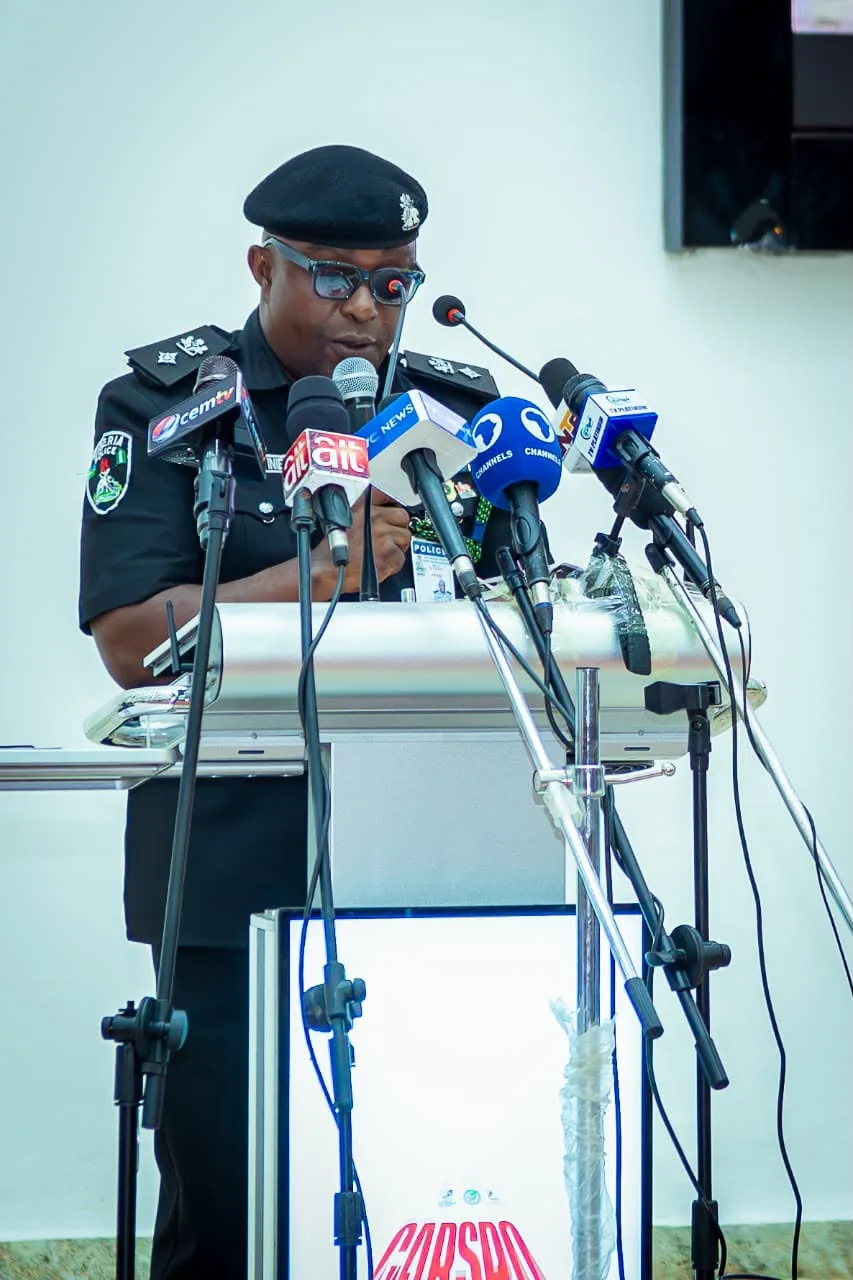
The 2026 Conference and Retreat for Senior Police Officers (CARSPO 2026) has adopted a 10-point resolution aimed at strengthening the Nigeria Police Force’s preparedness, coordination and professionalism in securing elections throughout the electoral cycle.
The resolutions, reached following presentations, panel discussions and contributions by participants at the conference, focused on election security planning, intelligence-led policing, inter-agency collaboration, personnel training, public-order management, investigation of electoral offences and institutional reforms.
The conference resolved as follows:
ELECTION SECURITY ROADMAP
The Nigeria Police Force is to develop and implement a comprehensive election-security roadmap covering all stages of the electoral cycle. An election-security task force with clearly defined responsibilities, timelines, performance indicators and monitoring mechanisms is to be established to oversee its implementation.
PREDICT, PREVENT AND MANAGE
The Force is to adopt a “Predict, Prevent and Manage” approach to election security, drawing on historical data, current intelligence and post-election assessments to identify electoral flashpoints, anticipate threats and improve future operations.
Election-security information is also to be digitised and preserved in a secure central database for effective planning and analysis.
SMART AND INTELLIGENCE-LED POLICING
The conference called for an accelerated transition to smart, digital and intelligence-led policing through the standardisation and digitisation of police processes and integration of relevant data systems.
Artificial intelligence is to be deployed responsibly in areas such as investigations, crime analysis, threat detection and operational decision-making, while ensuring that technology complements professional judgement and remains subject to data protection, supervisory review, auditing and human oversight.
STRONGER INTER-AGENCY COORDINATION
The conference resolved to strengthen collaboration among security and electoral agencies through the Inter-Agency Consultative Committee on Election Security.
This will include joint threat assessments and exercises, clearly defined command responsibilities, common briefing standards, interoperable communication systems and coordinated rapid-response mechanisms.
The conference also called for the harmonisation of INEC guidelines for security personnel deployed for elections with the Nigeria Police Force’s operational framework.
ADEQUATE FUNDING AND LOGISTICS
The conference stressed the need for adequate funding and timely provision of logistics, personnel allowances, equipment, duty rotations and transportation arrangements for election-security operations.
Operational plans are to place particular emphasis on protecting voters, electoral officials and election materials, with special consideration for women, older persons and persons with disabilities.
TRAINING, PROFESSIONALISM AND ACCOUNTABILITY
Election-duty personnel are to receive comprehensive training and retraining on electoral laws, intelligence gathering, operational procedures, political neutrality, conflict prevention, crowd management, technology and human-rights-compliant policing.
The conference further resolved that officers found culpable of partisanship, misconduct or failure to comply with established procedures should be held accountable and appropriately sanctioned.
RESPONSIBLE PUBLIC-ORDER MANAGEMENT
The conference called for public-order operations and the use of force to remain guided by the principles of legality, necessity, proportionality and accountability.
Communication, negotiation and de-escalation are to be prioritised, while force should only be used when lawful, necessary and proportionate.
Personnel handling firearms and other law-enforcement equipment are to receive appropriate training, while every use-of-force incident must be promptly reported, documented and subjected to supervisory review.
INVESTIGATION AND PROSECUTION OF ELECTORAL OFFENCES
The conference resolved to strengthen the investigation and prosecution of electoral offences through the establishment of properly trained election-security investigation teams.
It also called for improved collaboration among the Nigeria Police Force, INEC, EFCC, ICPC and relevant prosecutorial authorities in tackling vote-buying, intimidation, electoral violence, unlawful possession of arms and other offences associated with elections.
EFFECTIVE COMMUNICATION AND PUBLIC INFORMATION
Communication was identified as both an operational and leadership responsibility. The conference called for improved internal information flow, media relations, crisis communication and public enlightenment.
Police communication is to remain timely, accurate and based on verified information, while mechanisms should be strengthened to counter election-related misinformation and provide accessible channels through which members of the public can report concerns and complaints.
LEADERSHIP, PERSONNEL DEVELOPMENT AND REFORM
The conference resolved to strengthen institutional leadership, personnel development and organisational reform by incorporating emotional intelligence, ethical leadership, accountability and human-capital management into command training.
It also called for the preservation of institutional knowledge from serving and retired officers, improved retirement planning and transition support, as well as clear safeguards for any future decentralised policing framework.
Such safeguards, according to the resolution, should cover recruitment, funding, training, jurisdiction, professional standards, accountability and political neutrality.