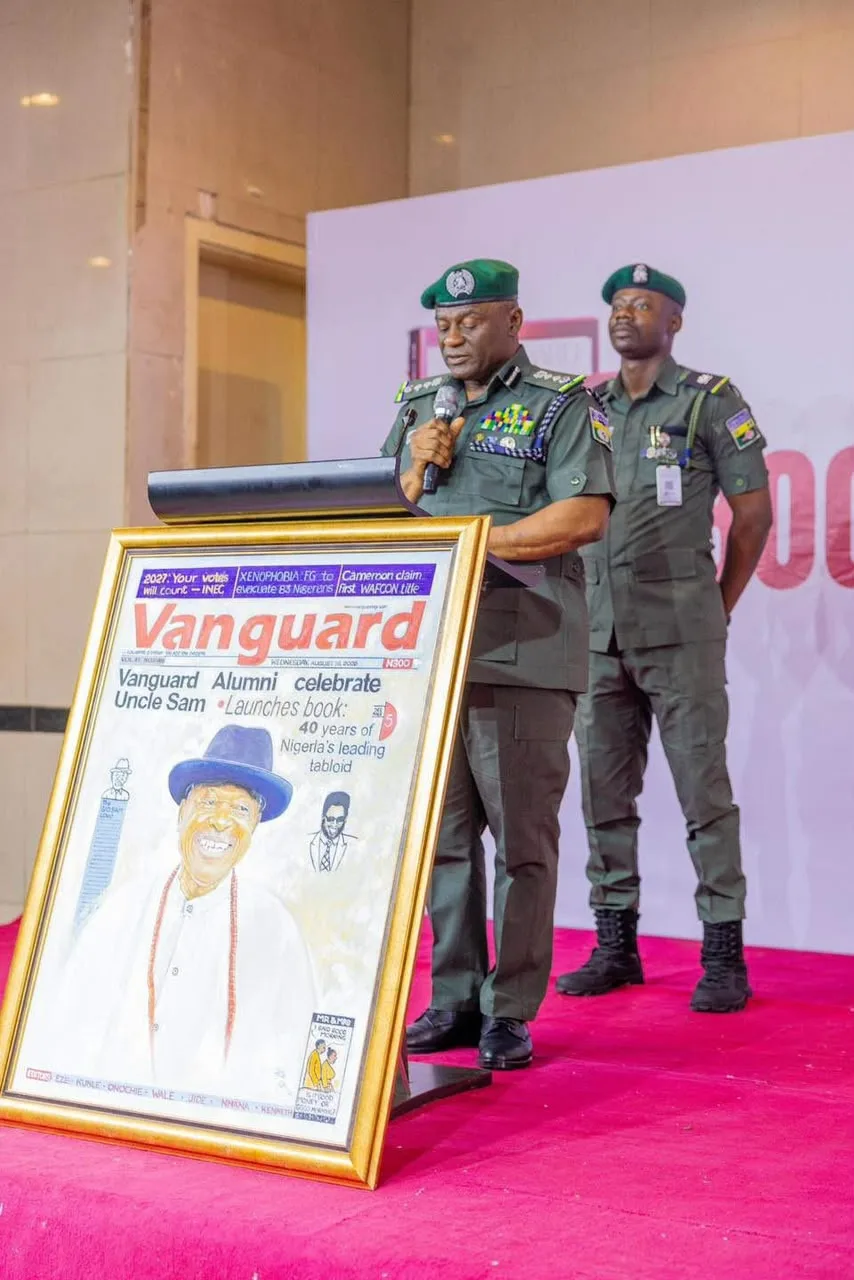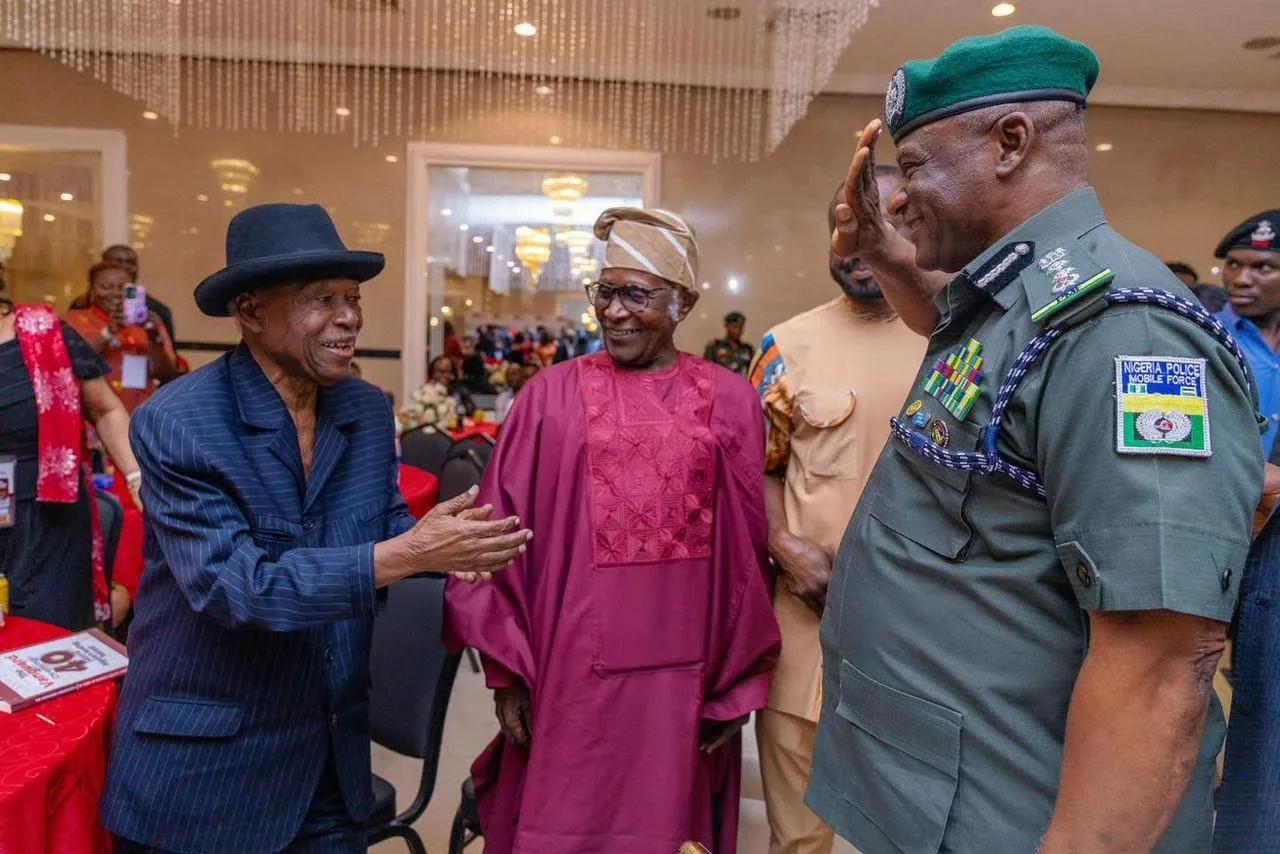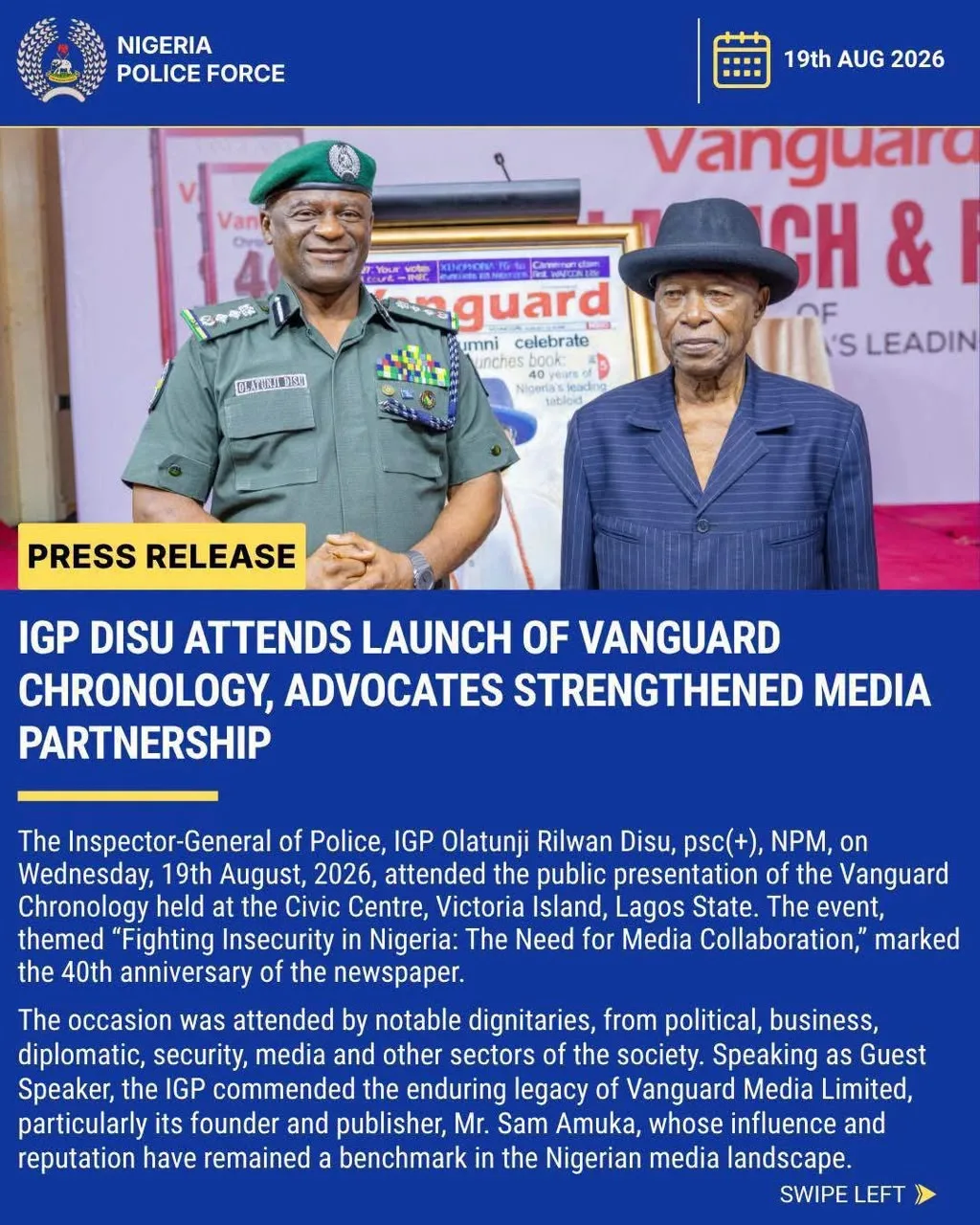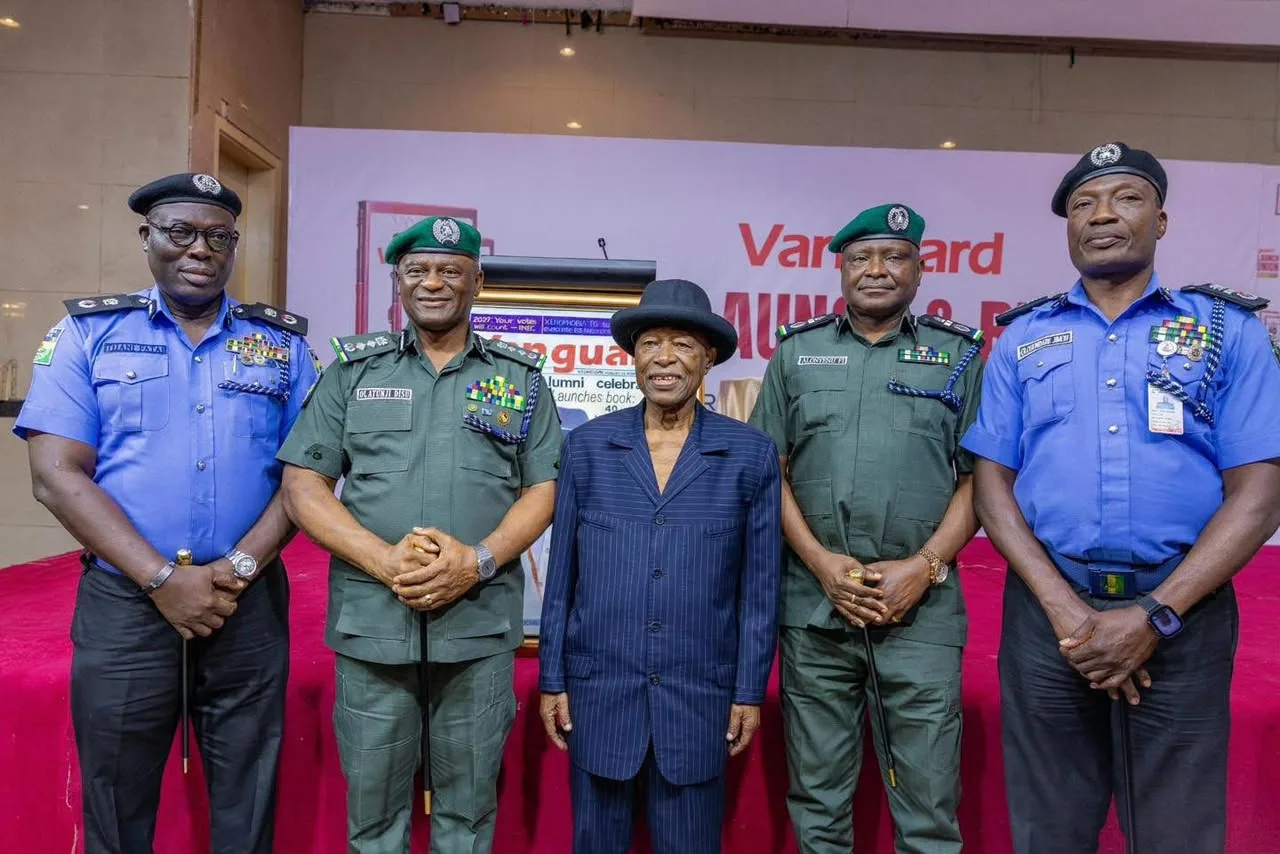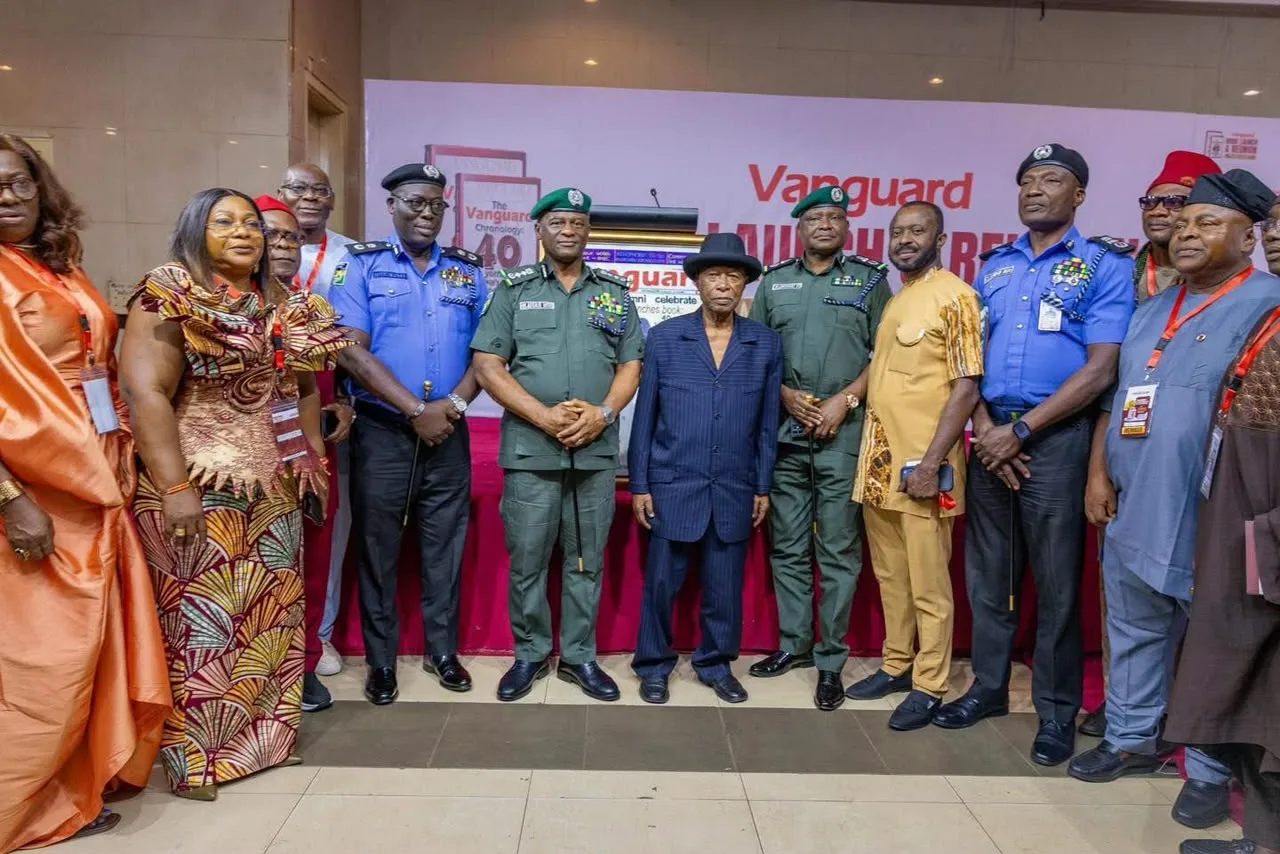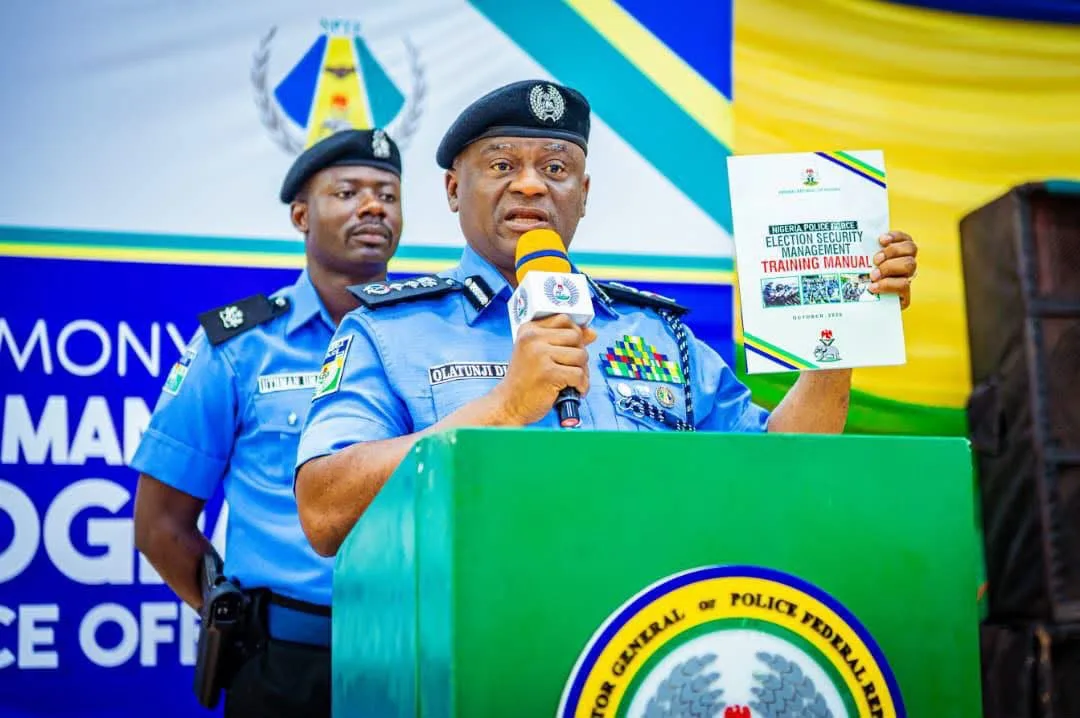
The Inspector-General of Police, IGP Olatunji Rilwan Disu, has called for stronger collaboration between the media and security agencies to effectively combat insecurity and strengthen public confidence in Nigeria’s security architecture.
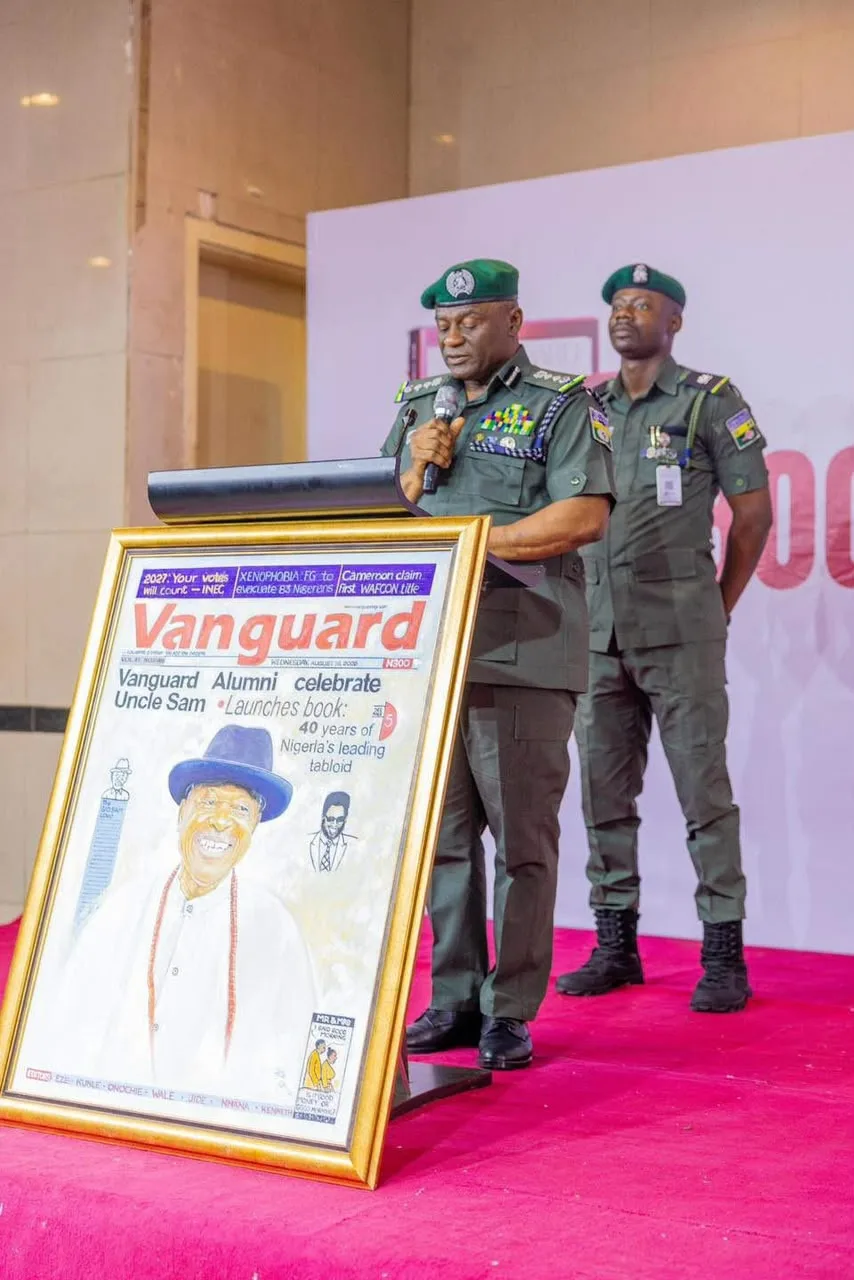
Disu made the call on Wednesday while delivering the keynote address at the public presentation and launch of The Vanguard Chronology: 40 Years of Nigeria’s Leading Tabloid, held in Lagos under the theme, “Fighting Insecurity in Nigeria: The Need for Media Collaboration.”
The IGP said the country’s security challenges, including kidnapping, terrorism, banditry, communal violence, organised crime, cybercrime and attacks on critical infrastructure, had become increasingly complex and interconnected.
He stressed that the Nigeria Police Force could not tackle the challenges alone, describing security as a collective national responsibility requiring the participation of government, security and intelligence agencies, traditional and religious leaders, communities, civil society organisations, the private sector and the media.
According to him, the media is no longer merely an observer of security developments but an important component of the national security ecosystem because of its wide reach and influence.
“A Police operation may affect a community, but a news report can reach millions of Nigerians within minutes,” Disu said, stressing that such influence came with significant responsibility.
He identified the media’s potential roles in security efforts to include disseminating verified information, providing early warning on emerging threats, educating citizens on security precautions, countering rumours and misinformation, promoting peaceful coexistence and building public confidence in legitimate security institutions.
The IGP, however, emphasised that collaboration must not compromise the independence of the media.
He said the Police did not expect journalists to become an extension of security agencies, but urged them to exercise professional independence while considering the possible security implications of sensitive reports.
Disu also raised concern over the growing threat posed by misinformation and disinformation, warning that false reports could trigger panic, communal tensions and retaliatory attacks before authorities had an opportunity to establish the facts.
He said the rapid spread of unverified information had transformed misinformation from merely a media challenge into a national security concern.
According to him, the appropriate response is not censorship but credible information, responsible journalism, media literacy and prompt communication by government and security institutions.
The IGP disclosed that the Nigeria Police Force was strengthening its strategic communication and public information mechanisms to ensure that Nigerians could obtain timely and accurate information from trusted sources during security incidents.
On the reporting of ongoing security operations, Disu urged journalists to exercise caution when publishing sensitive operational details, particularly information concerning the movement of security personnel, rescue operations, vulnerable victims, tactics and intelligence.
He noted that premature disclosure of such information could inadvertently endanger lives or compromise ongoing operations.
The IGP, however, said security concerns should not be used to suppress legitimate journalism, calling instead for constructive engagement between security agencies and media organisations.
He further acknowledged that the Police must also improve their relationship with journalists by providing accurate information, responding to legitimate enquiries, correcting misinformation and respecting the rights of media practitioners.
“Where Police personnel act improperly towards journalists, such conduct must be addressed through appropriate disciplinary and legal mechanisms,” he said.
Disu also identified journalists as valuable sources of early warning, noting that reporters often have direct contact with communities, traditional rulers, religious leaders and civil society groups and may become aware of emerging tensions before security agencies.
He called for stronger mechanisms through which relevant information could be responsibly shared with security authorities without compromising journalistic independence or the safety of reporters and their sources.
The IGP also urged the media to go beyond reporting casualties and violent incidents by highlighting stories of recovery, resilience, community rebuilding and peaceful interventions.
He said such reporting could help promote a national culture that rejects violence and encourages peaceful coexistence.
To institutionalise the partnership, Disu proposed regular security briefings between police leadership and senior editors, specialised training for journalists covering terrorism and organised crime, stronger systems for rapid verification of security information and dedicated channels for correcting false reports.
He also advocated closer cooperation between Police Community Relations Committees and local media organisations, joint public safety campaigns and stronger measures to protect journalists working in conflict-affected areas.
The IGP said Vanguard, given its four-decade history and national reach, could play a leading role in promoting the proposed partnership.
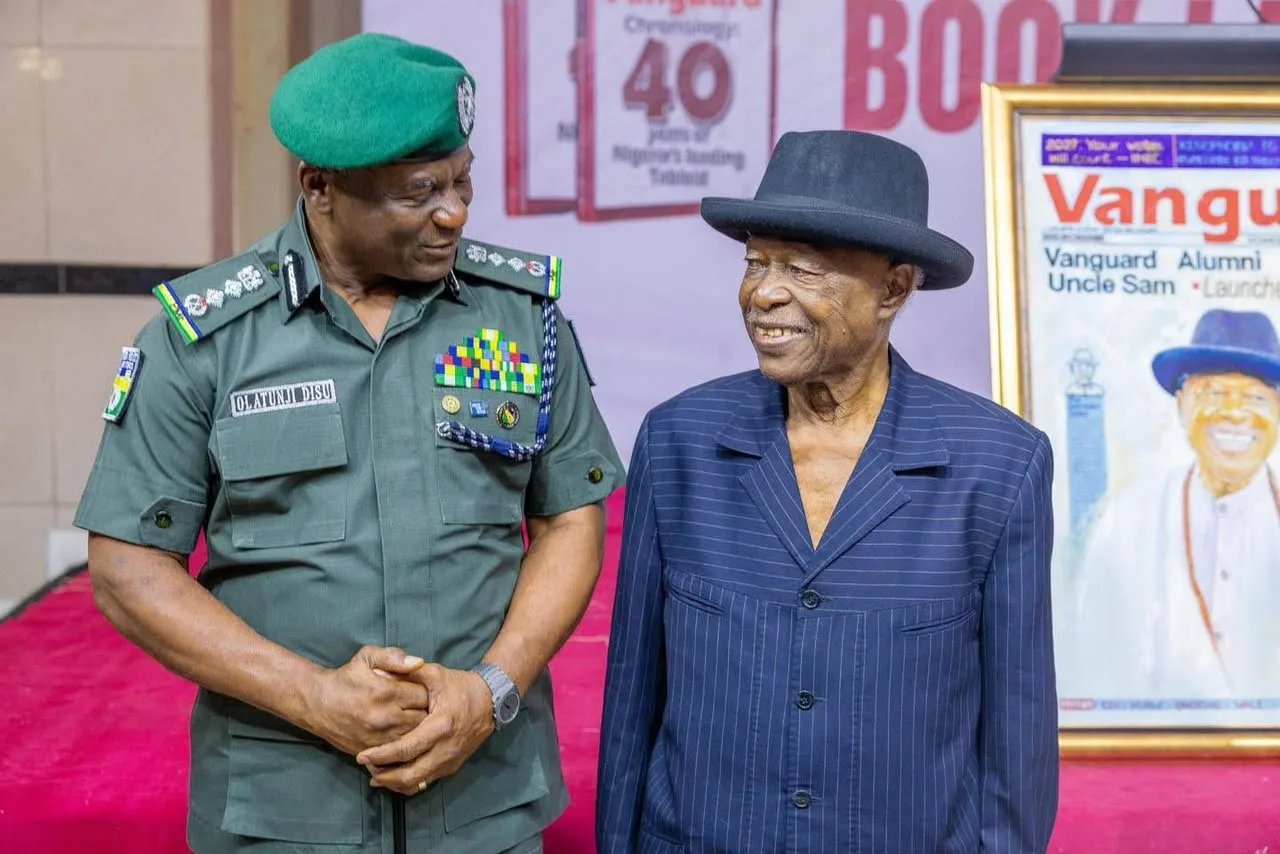
While congratulating Vanguard Media Limited on its 40th anniversary, Disu paid tribute to its founder and publisher, Sam Amuka, describing him as one of the defining figures in Nigerian journalism.
He commended Amuka for building an institution that had nurtured generations of journalists and contributed significantly to public discourse and national development.
Disu also congratulated Amuka on his 91st birthday and wished him continued good health and fulfilment.
He concluded by stressing that the battle against insecurity could not be won by the Police, Armed Forces, government or media acting independently.
He called for a united national effort anchored on truth, professionalism, accountability, mutual respect and a shared commitment to the public interest.
The IGP said the media had the power to either deepen division and fear or promote understanding and hope, urging all stakeholders to ensure that the power of information was used responsibly in building a safer and more peaceful Nigeria.