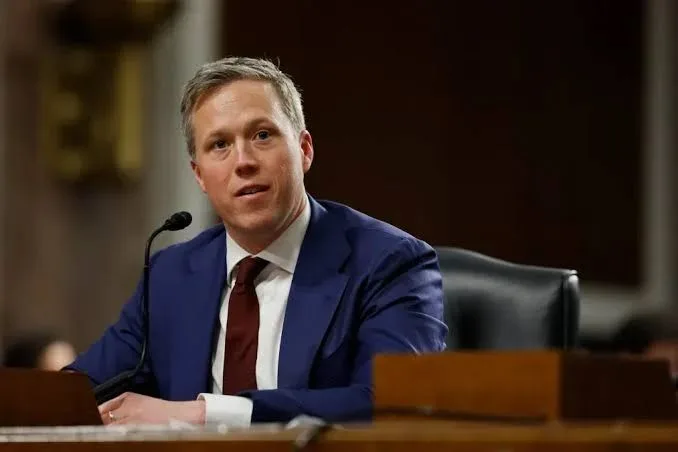
The White House confirmed Driscoll’s departure on Monday, following a report by The Wall Street Journal that he had submitted his resignation.
White House Principal Deputy Press Secretary Anna Kelly did not dispute the report, instead praising Driscoll’s performance in the Trump administration.
Kelly said Driscoll had played an important role in implementing President Donald Trump’s defence agenda and credited him with strengthening military readiness and combat capability.
She also highlighted his involvement in US military operations and his contribution to diplomatic efforts surrounding the Russia-Ukraine conflict.
According to Kelly, the Army had become “more powerful than ever” as a result of Driscoll’s work with Trump and Hegseth.
Driscoll’s resignation follows reports of tensions between him and Hegseth, despite his close relationship with Vice President JD Vance, whom he knew from law school.
Driscoll is a former US Army soldier who served in Iraq before entering politics. He unsuccessfully contested a congressional seat in 2020 and later worked as an adviser to Trump’s 2024 presidential campaign.
Democratic Senator Jack Reed, the senior Democrat on the Senate Armed Services Committee, criticised the development and blamed Hegseth for what he described as instability within the Pentagon.
Reed said he was concerned about Driscoll’s departure and accused Hegseth of causing lasting damage to the Department of Defence.
The resignation could further complicate the Army’s leadership structure at a time when the United States remains heavily engaged in military operations.
Hegseth dismissed Army Chief of Staff General Randy George in April but has yet to appoint a permanent replacement, potentially leaving the service without permanent civilian and uniformed leadership if Driscoll’s resignation takes effect.