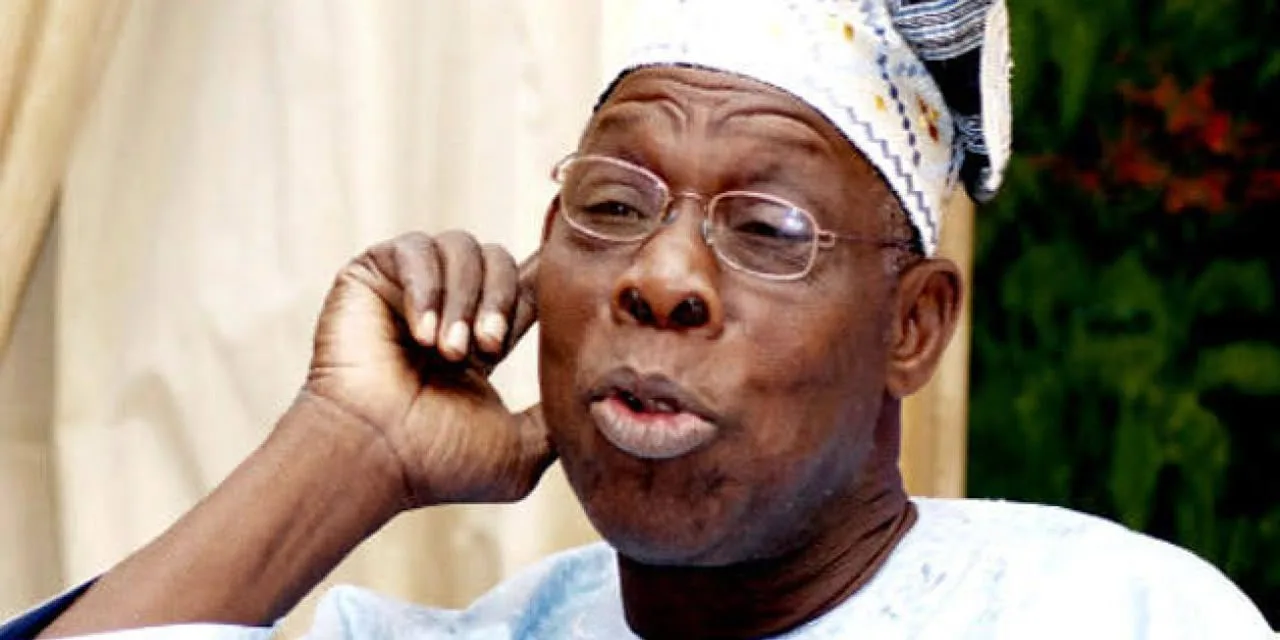
Former President Olusegun Obasanjo has expressed strong reservations about the Federal Government’s proposed $21 billion external borrowing, warning that excessive indebtedness could saddle future generations with serious economic consequences.
Obasanjo questioned the performance and capacity of successive Nigerian governments, demanding an explanation for the country’s persistent economic challenges despite decades of political leadership.
He spoke at the third Ajibosin Annual Symposium in Abeokuta, Ogun State, where discussions centred on Nigeria’s economic difficulties and the potential of artificial intelligence (AI) in addressing national development challenges.
The former president identified the declining value of the naira, widespread poverty and the growing number of out-of-school children as major concerns requiring urgent government attention.
Expressing frustration over the country’s economic situation, Obasanjo questioned how the naira had depreciated to approximately ₦1,500 against the dollar, challenging political leaders to account for their stewardship.
“What has Nigeria done in 47 years that we now have ₦1,500 to the dollar? What have we done?” he asked.
He also raised questions about the knowledge, competence and problem-solving abilities of those entrusted with governing the country.
“What do our leaders know, and what do they not know? And from what they know, what can they do for us?” he queried.
Addressing the controversy surrounding government borrowing, Obasanjo dismissed arguments that taking loans was harmless, warning that the consequences of accumulating unsustainable debt could affect generations yet unborn.
“And for anybody to say that debt is no leprosy is absolute nonsense. Debt is worse than leprosy, because leprosy destroys only one person. Debt destroys generations,” he said.
His comments appear to contrast with President Bola Tinubu’s position on borrowing. In April, while receiving a delegation of Plateau State leaders at the State House in Abuja, Tinubu defended the government’s borrowing approach, saying the country could take loans when necessary, provided it worked hard to repay them.
“If we have to borrow, we borrow. Borrowing is not leprosy, we just have to work hard to be able to pay for it,” the President had said.
Beyond the country’s debt profile, Obasanjo expressed concern over Nigeria’s education crisis, particularly the millions of children who remain outside the formal school system.
He put the number of out-of-school children at 24 million, describing the situation as a serious threat to the nation’s future.
“We have 24 million Nigerian children that should be in school that are not in school,” he said.
“And if you are looking for disaster of tomorrow, they are the disaster of tomorrow.”
He stressed the need for urgent interventions to address educational deficiencies and harness available technology to tackle pressing national challenges.
On artificial intelligence, the former president challenged experts and policymakers to explore how the technology could improve agricultural productivity, strengthen food security and address nutritional deficiencies.
He questioned whether AI could help Nigeria determine the types of food crops best suited to its needs and ensure adequate production to meet the nutritional demands of its population.
“Can AI help us to know the type of food that we should produce and produce them adequately, quantitatively, so that we can have food and nutritional security?” he asked.
Obasanjo’s remarks come amid growing scrutiny of the Federal Government’s proposed $21 billion external borrowing plan, particularly over concerns about the country’s ability to manage additional debt obligations while addressing pressing economic needs.
Nigeria continues to face significant economic pressures, including currency depreciation, rising living costs, food insecurity and infrastructure deficits.
The former president’s warning reinforces calls for greater accountability in public finance management and a borrowing strategy that prioritises productive investments capable of delivering sustainable economic growth rather than transferring financial burdens to future generations.