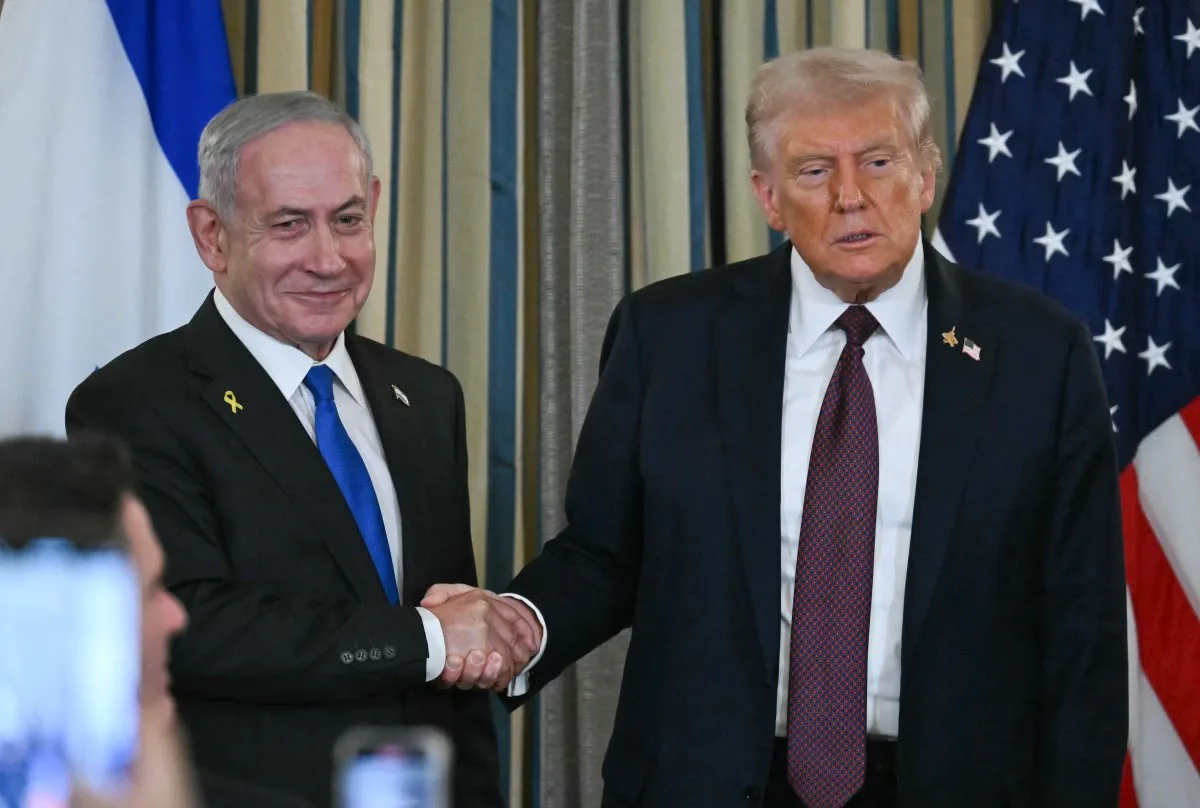
Israeli Prime Minister Benjamin Netanyahu is scheduled to meet United States President Donald Trump at the White House on Tuesday in their first face-to-face talks since the outbreak of the Iran war.
The meeting comes against the backdrop of reported differences between the two leaders over the handling of the conflict, although both have recently sought to project unity despite occasional public disagreements.
The discussions are expected to centre on the Iran conflict, which erupted after coordinated US-Israeli military strikes on Iran in late February. While Washington has indicated it is prepared to pursue diplomatic negotiations, hostilities between the United States and Iran resumed earlier this month after an April ceasefire collapsed. Israel has not directly participated in the latest round of fighting.
Tuesday’s talks will mark the eighth meeting between Trump and Netanyahu since the US president returned to office last year and their first in-person engagement since the war began.
Speaking before departing Israel on Monday, Netanyahu described the visit as both an honour and a significant responsibility.
“We will discuss all the issues on the agenda, first and foremost Iran. Naturally, our goal is to safeguard our security and also to expand the circle of peace around us,” he said.
Relations between the two leaders came under strain in April during negotiations over a ceasefire, when Trump openly criticised Netanyahu in strongly worded remarks and later referred to him as “a very difficult guy” in an interview.
Netanyahu, however, dismissed suggestions of a major rift, describing the exchanges as tactical disagreements while insisting both leaders remain united in pursuing the same strategic objectives.
In addition to Iran, the leaders are expected to review the implementation of the US-backed framework agreement signed between Israel and Lebanon last month, although efforts to enforce the deal have encountered difficulties.
The humanitarian crisis in Gaza is also expected to feature during the meeting as international efforts to revive reconstruction plans for the Palestinian territory remain stalled. Nearly three years after the Israel-Hamas war erupted, conditions in Gaza continue to deteriorate, while Israeli forces maintain military operations against individuals the army identifies as militants.
International relations expert Yonatan Freeman of the Hebrew University of Jerusalem believes one of the key objectives of the visit is to demonstrate that relations between Washington and Tel Aviv remain strong despite speculation of growing tensions.
“I think that the main issue… is to show the world, to show Iran, and also even Lebanon and others as well specifically, that there is no break or any kind of major disagreement between the United States and Israel,” he told AFP.
“There’s more in agreement between the two leaders than disagreement,” he added.
Freeman argued that any differences between Trump and Netanyahu relate more to the pace, intensity and timing of military operations than to their broader strategic goals.
He also suggested that Trump’s regional priorities remain focused on Iran and expanding the Abraham Accords—the US-brokered normalisation agreements that established diplomatic relations between Israel and several Arab nations during his first term—rather than Gaza.
However, some analysts believe the discussions could also explore the possibility of reducing Israel’s military footprint in parts of the region, including Lebanon, Syria and Gaza.
Netanyahu’s visit comes as Israel prepares for national elections later this year, where he is expected to seek another term in office.
Recent opinion polls indicate he is trailing his political rivals, with many Israelis continuing to criticise his government over its failure to prevent Hamas’s October 7, 2023 attack, an event that triggered the war in Gaza.