Nearly 5,000 people, 85 per cent of them minors, have been arrested in France following days of nationwide protests by secondary school students over worsening conditions in the country’s education system.
The demonstrations have disrupted activities in about 400 schools, with several institutions closed amid blockades, clashes between protesters and police and attacks on school facilities.
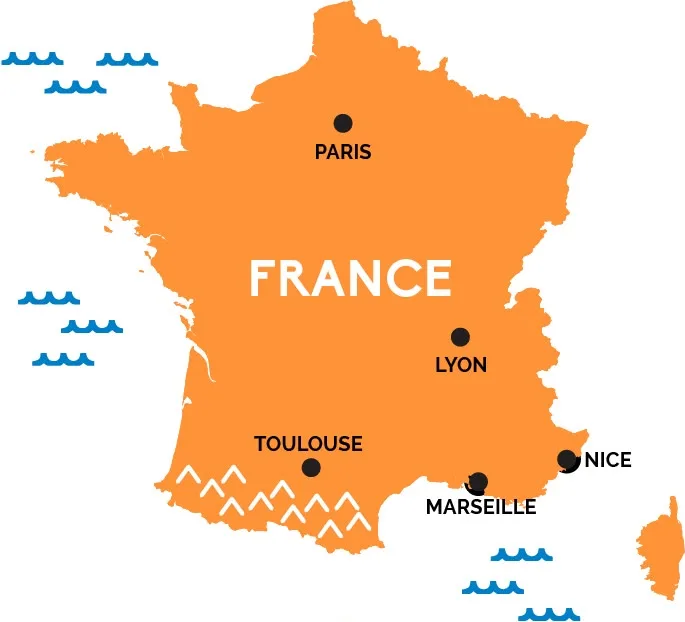
The unrest, which started in the Paris region in September, has since spread to several parts of France as students protest what they describe as overcrowded classrooms, inadequate facilities, teacher shortages and underfunding.
The movement began after students and teachers mobilised over staff shortages at a secondary school in Créteil, southeast of Paris, before spreading to other schools across the country.
Students have also raised concerns about deteriorating school buildings, uncomfortable temperatures in classrooms and inadequate furniture.
French media have published images showing damaged facilities, including leaking roofs, collapsed ceilings and other poor conditions in some schools.
A 15-year-old student who took part in a demonstration in Pantin, a Paris suburb, said overcrowding had made learning difficult.
The protests have increasingly been linked to concerns about inequality, with students arguing that those in poorer communities do not receive the same quality of education, facilities and opportunities available to students in wealthier areas.
The unrest has, however, been accompanied by incidents of violence in some cities.
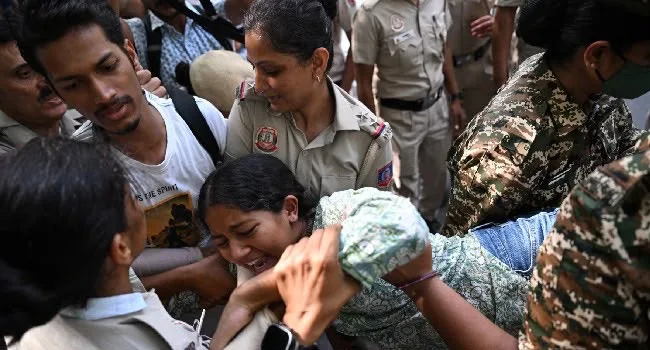
Authorities said about 2,000 people were taken into custody on Thursday alone, pushing the total number of arrests during the protests to nearly 5,000. Minors reportedly account for about 85 per cent of those detained.
Two students also sustained serious injuries after allegedly being struck by police crowd-control projectiles.
According to authorities, more than 170 students and 78 school staff members have been injured, while hundreds of police officers have also sustained injuries during the unrest.
French Justice Minister Gérald Darmanin said the situation had moved beyond a student demonstration and had become a public-order challenge.
Amnesty International, however, accused French security forces of using excessive force against minors, including batons, tear gas and non-lethal weapons.
The rights organisation called on authorities to prioritise dialogue and de-escalation, while the Interior Ministry has opened investigations into allegations of police violence.
The police have defended their response, maintaining that officers were confronted by individuals seeking to provoke clashes and that force was used only when necessary and proportionately.
The protests have also attracted political attention, with the left-wing France Unbowed party expressing support for the students’ demands.
Its leader, Jean-Luc Mélenchon, has criticised the police response and called for greater protection of young protesters, while denying that his party organised the demonstrations.
President Emmanuel Macron has condemned any political support for violence, while politicians from the National Rally have accused their left-wing opponents of worsening the unrest.
The government has also warned parents about allowing their children to participate in violent demonstrations, with the Justice Minister suggesting that parents could potentially be held financially responsible for damage caused by their children.
Student representatives have distanced themselves from the violence and maintained that their movement is fundamentally peaceful.
Nathanaël Combary of the Renouveau Lycéen student union said protesters did not associate themselves with those responsible for destruction and street violence.
Meanwhile, a nationwide labour mobilisation in support of the students is planned for Tuesday, raising concerns that the unrest could develop into a broader protest movement.
The influential CGT trade union has called on workers to join demonstrations in solidarity with the students, potentially expanding the protests beyond schools.
The scale of the disruption has also created financial pressure, with authorities in the Île-de-France region estimating damage at about €7 million, while the Occitanie region reported losses of approximately €3 million.
The protests come despite education being one of the largest spending areas in France’s proposed 2027 budget, with €65.5 billion allocated to schools.
Students and teachers, however, maintain that increased government spending has yet to translate into meaningful improvements in the conditions under which teaching and learning take place.